
Writer: ARCHANA K
Editor: SHIVRAJ PATEL
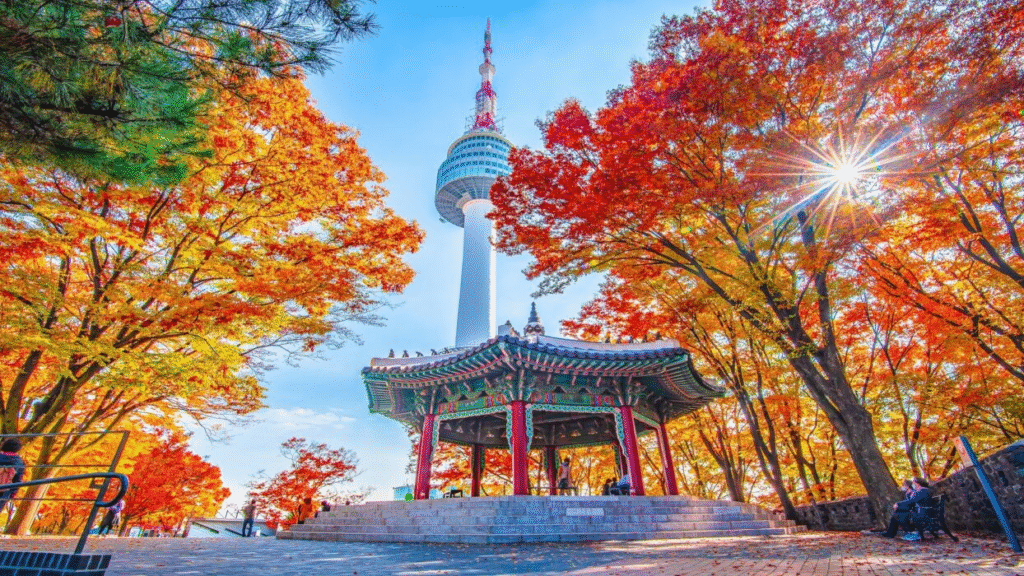
Every Powerful nation has a story, but South Korea is one ofextraordinary resilience. Today, it stands as one of the most developed and safest countries in the world. South Korea’sdevelopment journey is one of the most remarkable transformations in history. But Korea’s story is not just about economic growth- it’s about survival, strength,andvision.
Picture Credit: PINTEREST
Korea’s struggles and sacrifices behind Independence: (1910-1945):
Let’s talk about Korea’s struggles and sacrifices behind the independence.
From 1910 to 1945, Korea was under Japanese colonial rule. This era was marked by political oppression, cultural erasure, economic exploitation, and widespread resistance by the Korean people.
How It Began:
- The roots of Japanese control ; trace back to the late 19th century when Korea became a geopolitical interest for imperial powers.
- In 1905, after the Russo-Japanese war, Korea was made a protectorateof Japan through the Eulsa Treaty, which was signed without the consent of the Korean emperor.
- Finally in 1910, the Japan-Korea Annexation Treatywas signed ( under coercion), and Korea officially became a colony of Japan.
- Political and Social Oppression :
- Loss of Korean Sovereignty – Korea’s royal family was dethroned and all governance was controlled by the Japanese Government-General in Seoul.
- Koreans had no political rights; they could not vote, participate in government, or protest.
- Censorship and Surveillance :
- Strict censorship of newspapers, books,and radio.
- Police-state tactics, mass arrests, torture,and executions of suspected independence activists.
- Cultural Suppression and identity erasure :
- Ban on Korean language and history
- Korean was banned in schools by the 1930, replaced with Japanese
- Traditional Korean customs, clothing(Hanbok), and name were discouraged or outright banned.
- Name Change Policy
- As part of its assimilation policy, Japan forced a name change ordinance in 1939, and pressured Korean to change their names.
- The aim was to assimilate Koreans into Japanese identity and erase Korean heritage.
- Economic Exploitation and Forced Labor:
- Japan seized land and redistributed it, mostly benefiting Japanese settlers.
- Koreans become tenant farmers or low-wage laborers in mines and factories.
- During World War 2, hundreds of thousands of Koreans were forcibly mobilized for labor and military service in Japan and other occupied areas.
After all this, the Koreans spirit didn’t fade. The protest began in Seoul, with a declaration read in Tangol Park to launch the Movement. The March 1st Movement was a nationwide protest against Japanese colonial rule, organized by Koreans in Korea and abroad. Its officially began on March 1, 1919, and spread across the Korean peninsula and to Korea communities in China, the Russian Empire, the United Nation, Mexico, and Japan.
The Mansei Movement:
The ManseiMovement (March 1, 1919) the protest shouting ‘Mansei” which means (“Long live Korean independence”). During this massive uprising, about 0.8 to 2 million people participated.
According to the 1920 Korean estimate:
- 798 to 7509 people were killed
- 46,948 people were arrested.
But their courage lit the path to Freedom.
Freedom Fighters:
• Sohn-Byung-Hee (1861-1922) : Religious leader and main drafter of the march 1st
movement.
• Yu Gwan-Sun (1902-1920): Led local March 1st demonstrations, arrested and tortured by Japanese authorities. And she died in prison at the age of 17.
• Ahn-Jung-Geun ( 1879-1910): He gave his life for Peace and Justice in East Asia.
• Kim-Gu (1876-1949) :He is the key leader of the Provisional Governmentin Exile. Believed in beauty, not violence. His dream shaped Korea’s Soul.
And as we remember the sacrifices of Korea’s brave freedom fighters, we are reminded that true independence is not just about the absence of oppressions, but the presence of sacrifice, dignity, hope, and the power of shape one’s own future and the love for their country.
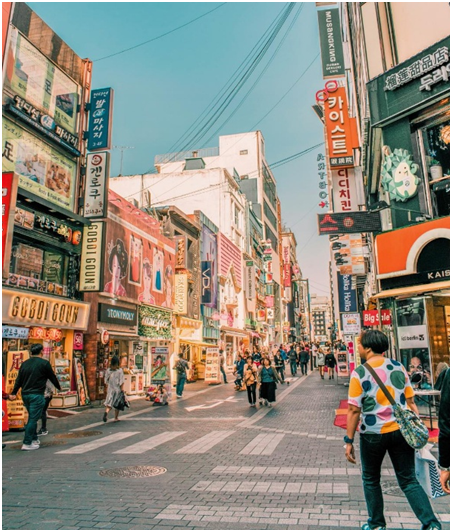
Today, Korea isdeveloped, powerful, safe and economically grown country.
Share it with your Friends & Family :