Writer: ALISHA NAAZ
Editor: SHIVRAJ PATEL
When individuals picture South Korea, it’s easy to think of the clear : the shining bright of Seoul, the infinite K-pop playlists, the world’s fastest Wi-Fi. But there’s another story silently running beside the titles. The same tech that makes Korea a global entertainment power house is also quietly protecting centuries-old traditions, and even helping people live healthier, longer lives.
Saving the Past with Tomorrow’s Technologies
Korea’s history is deep enough to fill several lifetimes from the wood elegance of hanok homes to the melancholy rise and fall of pansori singing. But history can evaporate if it’s only left to books and glass cases. And now creation is coming in, not to supplant custom, but to keep it vital in ways our ancestors could never have envisioned.
Slide on a virtual reality head set in Nairobi or New York, and you can stroll around Jeonju Hanok Village, gravel crunching beneath your feet, tiled roofs arching against the sky.
Ancient things, once bared to time and accident, have been datafied into precise 3D models, safeguarded against fire or rot. Even the quivering, failing voices of aged pansori recordings are restored by AI, drawing back the veil of static to reveal as rich a tone as the day they were sung.
It’s not storage. It’s resurrection.
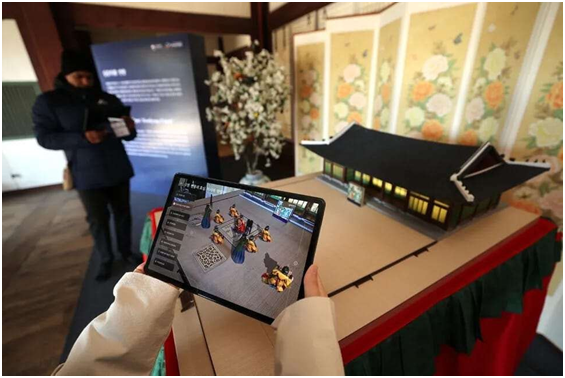
Picure Credit: Jung Yong-il/ Hankyoreh, from the Digital Art Appreciation Festival at Changgyeong Palace
Health and Heritage: A Surprising Link
That’s where it gets even more fascinating: the same technology employed to keep history alive is now assisting people to get well.
Virtual reality software originally designed to lead museum visitors on a tour is now being repurposed for dementia treatment – returning patients to the familiar sounds and scenes of their childhood. AR technology that once reconstructed old palaces on the computer screen is now assisting stroke victims in learning to move again, making tedious rehab more like play.
Even AI that was trained to restore old music is now tuning for signs of sickness-detecting small changes in speech patterns that could indicate memory loss or cognitive decline.
Culture, in this instance, isn’t something you go visit at leisure. It’s becoming part of how individuals heal, reconnect, and continue living in full.
A Model for the World
What’sremarkableaboutSouthKorea’sstrategyistheattitudebehindit:technology isn’tthe end goal – it’s the gateway. It links yesterday to today, art to science, heritage to health.
Tourisminfrastructureoncemeantforvisitorsisnowbeingusedbypatients.Ideasconceived in cultural incubators find their way into hospitals.
For other nations concerned about losing themselves amidst the dash for modernization, this isevidencethatitneedn’thappen.Preservationanddevelopmentcannourishoneanother.An effectively told history from the past may one day be the catalyst that inspires hope in someone struggling their way back towards health.
Beyond Boundaries
In Korea’s digital narrative, the future doesn’t rewrite the past. Instead, it folds it in quietly, reverently and employs sit to make life improved here and now. The moral is easy, but strong: the finest innovations don’t merely turn things faster or brighter; they make us more human.
And if that means a Busan elder lady is able to hear the voice of a singer she adored as a child once again or a stroke victim in Seoul will be able to walk thanks to a virtual palace then maybe this is what progress really looks like.
Share it with your family and friends:
I can’t believe it, my first article is out in the world🥹🎉✨
Wow! Keep it up.. 🤩
Interesting one.