
WRITER – ARCHANA K
EDITOR- SHIVRAJ PATEL

Picture Credits: WIKIPEDIA
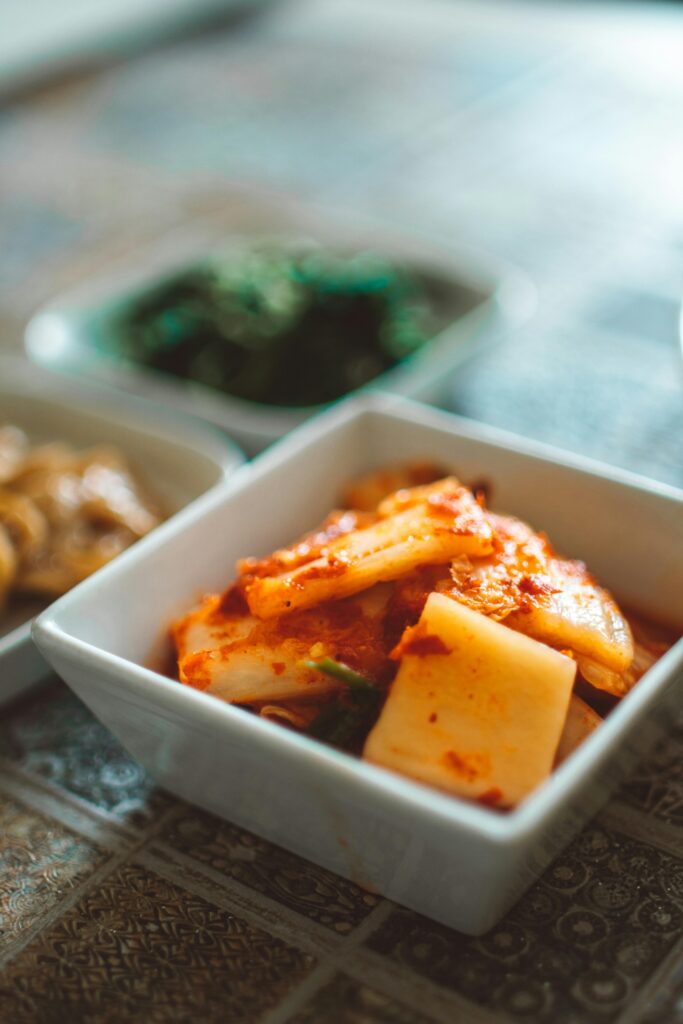
Kimchi is one of the most major and important traditional food in Korea. When people think about Korean traditional food, the first food that often comes to mind is Kimchi. Kimchi is Korea’s cultural food. It’s not just a side dish, Kimchi is culture and identity of Korea. The most important dish in Korea’s cuisine is Kimchi. There are so many verities of kimchi that made with different vegetables as the main ingredients.
History :
The word ‘kimchi’ is got from the Korean word ‘chimchae’ means ‘salted vegetables’. Originally, kimchi did not contain chili peppers. Red pepper was introduced to Korea in the 16th century.
Three Kingdoms Period (57 BC to 668 AD), the three major Kingdoms
- Goguryeo (37 BCE to 668 CE):
Located in northern Korea
Known for its strong warrior culture
Considered the earliest form of Kimchi
- Baekje (18 BCE to 660 CE):
Located in the southwestern part of Korea
Known for advanced agriculture and trade with Japan and China.
Food culture was more refined
- Silla (57 BCE to 935 CE):
Located in the southeastern region
Known for developing Buddhist culture
Koreans started as a necessity of storing and preserving vegetables during the long cold winters when many people died of starvation. Kimchi is been eaten in Korea over 2,000 years. In those times, it was simply preserved with salted vegetables for winter season. There were no red chili peppers in early Kimchi. After chili peppers arrived in Korea from the Americas in the early 1600s, Koreans started making red and spicy kimchi. During Japanese colonial rule (1910-1945) Kimchi became a Symbol of Korean culture and identity. Today kimchi is a national pride.
Global Recognition: In 2013, UNESCO (United Nations Educational, Scientific and Cultural Organization) listed ‘Kimjang’ (the traditional process of making kimchi together) as a World Intangible Cultural Heritage. Kimchi is now known worldwide. There are over 200 verities of kimchi, and it is served with every Korean meal. In 2006, ‘Health Magazine’ listed kimchi one of the world’s five healthiest foods.
In 2008, South Korea sent Kimchi into space with astronaut Yi So-Yeon on a Russian Soyuz mission. This made kimchi is the first fermented food to be eaten in outer space.
Kimchi as a cultural identity During Occupation:
During the Japanese colonial rule in Korea (1910-1945), Korean culture, language, and traditions were stolen. Kimchi remained a quite form of resistance. It became symbol of nation pride and identity, reminding Koreans of their roots and heritage. In past-liberation Korea, especially after the Korean War (1950-1953), kimchi was essential of survival amid poverty. In fact kimchi was not just about food – it was about family, survival and solidarity. Korean’s eats over 2 million tons of Kimchi annually. Even in Seoul there is Kimchi Museum, and the mission is to inform the world about one of the major and healthiest items of Korean cuisine, is Kimchi.
How Kimchi is Made: Kimchi is a fermented side dish made with
Napa cabbage or radish
Salt
Garlic, ginger, red pepper powder
Fish sauce or fermented seafood
Scallions or other vegetables
Benefits of Kimchi:
- Rich in probiotics
- High in fiber
- Low calories
- Boosts gut health and immunity
- Loaded with vitamin A, B, and C
Korean’s often say “Kimchi” rather than ‘cheese’ to make people smile and happy. Kimchi has not only remained a staple in Korean cuisine but also has earned Global Recognition as a world’s 5 healthiest food and superfood. Kimchi is Korean identity. Kimchi is not just a side dish-it’s a living history of Korea.
Share it with your family and friends :