
WRITER : FAVOUR EMMANUEL
EDITOR : SHIVRAJ PATEL
Every August 15th, South Koreans come together to observe Gwangbokjeol (광복절), or Korean Liberation Day. This isn’t just another holiday; it’s a deeply meaningful day that recalls the end of 35 years of Japanese rule in 1945. Think of it as a national birthday, a time to remember how the country regained its identity and the strong spirit that keeps Korea going strong today.
Picture Credit : Pinterest
Life Under Occupation
Back in 1910, Japan took over Korea, starting a long period of control that lasted until World War II ended in 1945. During this time, Japan tried to erase Korean culture and keep tight control over the people. They made it against the rules to speak Korean in schools, forced people to take Japanese names, and discouraged Korean traditions.
Everyday life was hard. Many Koreans were forced to work in terrible conditions, and women were forced to serve as comfort women for Japanese soldiers. Farmers lost their lands, students were taught to be ashamed of their culture, and anyone who stood up to the Japanese was arrested, hurt, or even killed.
Never Giving Up Hope
Even under harsh rule, Koreans never lost their will to resist. People formed resistance groups both inside and outside of Korea. A major event was the March 1st Movement in 1919, when people across the country protested for independence. Although the protests were violently put down, they caught the world’s attention and led to the creation of the Korean Provisional Government in Shanghai, which kept fighting for freedom.
People like Yu Gwan-sun, a young student who gave her life for the cause, and Ahn Jung-geun, a nationalist who killed a Japanese official, became symbols of bravery and sacrifice. Their efforts, along with diplomatic pressure and secret underground movements, kept the dream of independence alive.
The Light Returns
Finally, on August 15, 1945, Japan surrendered to the Allied forces, which meant the end of World War II and the liberation of Korea. Gwangbokjeol means the day the light returned, a way of saying that Korea was finally free from a long, dark period.
But freedom wasn’t simple. The Korean Peninsula was split in half along the 38th parallel by the United States and the Soviet Union for administrative reasons. This led to the creation of two separate countries, North Korea and South Korea, in 1948. This split eventually led to the Korean War in 1950, a terrible conflict that made the division even deeper.
Celebrating Freedom Today
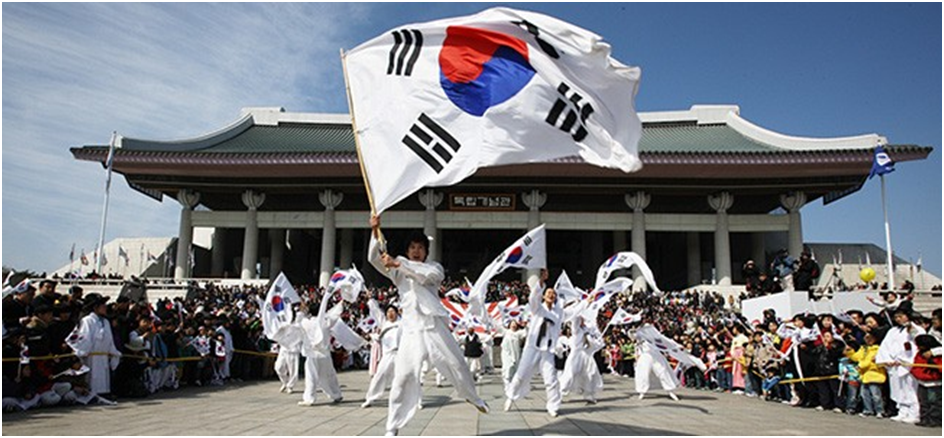
Today, Gwangbokjeol is a big national holiday in South Korea. There are ceremonies, flag-raising events, and moments to remember those who fought for freedom. The South Korean President gives a speech at the Seoul National Cemetery, honoring the people who died for their country. People proudly wave the Taegeukgi (South Korean flag), and the national anthem is played at public events and in homes.
TV shows cultural programs, exhibits, and documentaries to teach younger generations about Korean history. Places like the Independence Hall of Korea in Cheonan welcome tons of visitors during this time.
Mostly, this day to think about what freedom, strength, national identity, and togetherness means. It’s not just about celebrating the past; it’s a reminder of how far Korea has come.
A Message for the World
For those who don’t live in Korea, Gwangbokjeol shows what can happen with *hard work, a sense of identity, and the ability to heal. Korea has gone from being a country under control to a major economic powerhouse, leading the way in technology, education, and pop culture. This shows what a country can do when it works together and has a clear goal.
You might know Korea from its TV shows and K-pop, but it’s history of struggle and success is what makes the country special. By understanding Gwangbokjeol, people around the world can see beyond the surface and appreciate the pain, strength, and resilience that have shaped Korea.
An Ongoing Dream
Even though South Korea keeps growing and doing well, the division of the peninsula is still a problem. For many Koreans, Gwangbokjeol is both a day to celebrate and a day to hope that one day, the country will be united again. The holiday is a reminder that independence means not only being free from outside control but also protecting peace, culture, and the dreams of future generations.
Korean Liberation Day is more than just a holiday; it’s a story of a country being reborn. It’s a tribute to the power of people who refused to let their identity disappear. From the difficult times of occupation, South Korea has risen with determination, bravery, and a vision for a better future. As the world joins Korea in celebrating, Gwangbokjeol sends a clear message: freedom is worth fighting for.
Share it with your Family & Friends :