
WRITER : ISHA CHAUDHARY
EDITOR : ANANYA RAUT
Picture Credit: CNN
For generations, Korean culture has accepted the belief of “Yak-sik-dong-won,” or that food and medicine have the same source. This long-held notion considers food not only as sustenance but also as a means to heal and maintain a healthy body. Traditional Korean cooking is full of meals well put together to offer both delectable tastes and important health benefits, usually through the use of the healing power of fermentation, medicinal herbs, and balanced nutrition.
The Fermentation Power: Kimchi, Doenjang, and Ganjang
Fermented foods are the keystone of the Korean diet and are prized for their profound medicinal benefits. The slow, long process of fermentation turns plain ingredients into concentrated, nutrient-rich foods.
Kimchi:
Korea’s best-loved food, kimchi is a fermented vegetable dish, typically made from napa cabbage, flavored with gochugaru (chili powder), garlic, ginger, and other spices. Kimchi contains a wealth of probiotics, which are beneficial microbes that ensure a healthy gut microbiome. A balanced gut will ensure healthy immunity, better digestion, and even mental well-being. Kimchi is also a good source of vitamins (A, B, and C), minerals, and fiber. It also contains components like garlic and ginger, which are anti-inflammatory and antioxidant in nature. Scientific research has even associated kimchi with a reduced risk of certain cancers, anti-obesity properties, and cardiovascular benefits.
Doenjang (Soybean Paste):
A fermented soybean paste, doenjang is a staple seasoning in Korean cuisine. It is produced through the fermentation of soybean blocks (meju) in brine solution. This acts to form a rich, savory paste filled with isoflavones and helpful enzymes. Isoflavones in soybeans have the benefit of potentially preventing cancer, particularly breast and prostate cancer. Doenjang also has a component named lecithin, which maintains brain health and lowers cholesterol levels. It is a main ingredient in foods such as doenjang jjigae (soybean paste stew), a nourishing stew usually taken with an assortment of vegetables and tofu.
Ganjang (Soy Sauce):
Doenjang is a by-product of the fermentation of doenjang. It is a light-colored, salty liquid with a rich, deep umami flavor that it imparts to food. Like doenjang, it is high in isoflavones and amino acids and is good for the body. Its fermentation also yields health-promoting antioxidants that can shield the body’s cells against injury.
Healing Soups and Porridges:
Korean meals include a number of soups (guk) and porridges (juk) that are highly esteemed for their medicinal properties, frequently served to the ill or in need of a energy boost.
Samgyetang (Ginseng Chicken Soup):
A medicinal food commonly eaten during the sweltering summer season to restore energy and fight against heat fatigue. Samgyetang is a whole young chicken filled with glutinous rice, ginseng, jujubes (Korean dates), and garlic, and then simmered in a broth. Ginseng, the key ingredient, is a powerful adaptogen said to lower stress levels, enhance cognitive function, and strengthen the immune system. The rich chicken broth supplies protein and collagen for muscle and joint welfare and is an ideal meal for recovery.
Juk (Porridge):
Comfort food for the sick, juk is a rice porridge prepared with vegetables, grains, or other ingredients to make a smooth, easily digested food. Common variations are jeonbokjuk (abalone porridge), which is rich in protein and minerals, and frequently served to aid recovery from surgery or illness. Another is hobak-juk (pumpkin porridge), a sweet and creamy breakfast porridge that is easy to digest and high in beta-carotene, an antioxidant that is good for eyes and the immune system.
The Art of Balanced Meals:
Bibimbap (Vegetable and Meat Mixed Rice):
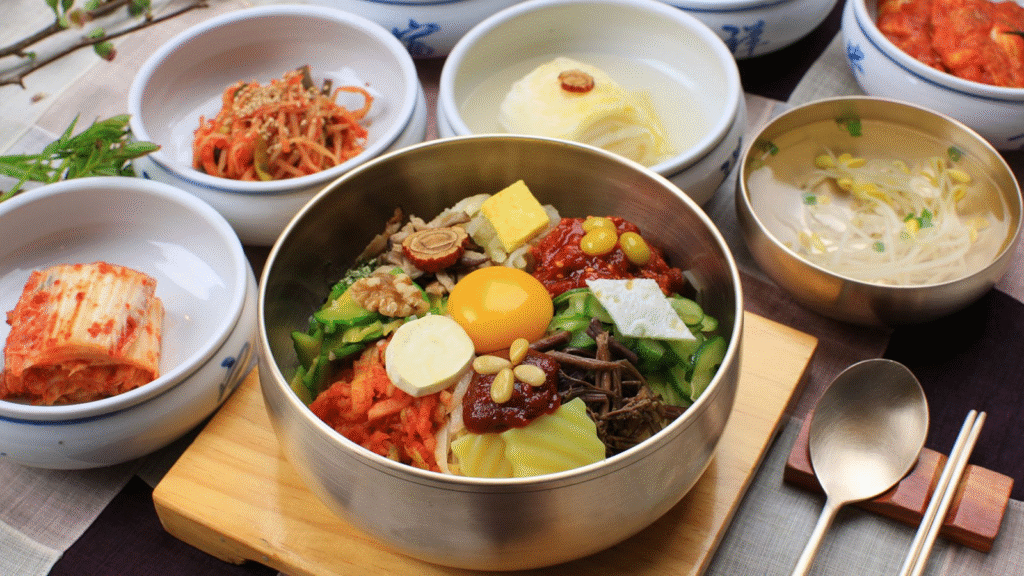
This multi-colored dish literally translates to “mixed rice.” It is a bowl of steaming rice decorated with a rainbow of seasoned vegetables (namul), meat, a fried egg, and gochujang. Having so many ingredients, the dish provides a full nutritional spectrum with carbohydrates, protein, and a variety of vitamins and minerals from each type of vegetable. In traditional Korean medicine, the five colors of bibimbap—white (rice, radish), green (vegetables), red (gochujang, carrots), yellow (egg yolk), and black (mushrooms)—are said to symbolize harmony among the five elements and to balance the internal energies of the body. The look and philosophy of this balance transform bibimbap into more than a meal, but a validation of the belief that food is medicine.
The genius of traditional Korean cuisine is that it has the capacity to marry common ingredients with deep health principles. From the healing properties of fermented foods in the gut to the nourishing broths and to the balanced harmony of colorful vegetable dishes, Korean cuisine is a living testament to the saying that what you eat can be your strongest medicine.
What is your favorite Korean Dish? Do let us know in the comments.
Share this Article with your Family & Friends: