
WRITER: PRACHI SHARMA
EDITOR: NANDINI
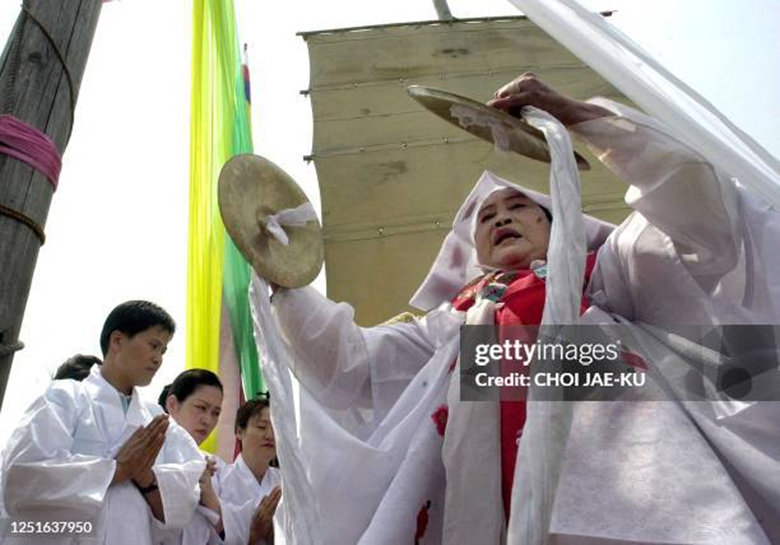
Image Credit: gettyimages (Choi Jae-Ku)
Every culture in the world is full of scary spirits and mysterious tales. Just like the stories of witches or women sitting on trees are told in India, Korean folktales related to spirits have also been frightening and terrifying people for centuries. The most famous image among these is that of the “Woman in White” (백의 여인).
Long, black, open hair, white clothes, and a sad face, this spirit appears again and again in Korean folklore. Its image in films, dramas, and horror stories is so deep that people feel shivers just by looking at it. But if this myth is seen only from the point of view of fear, its true depth will be missed. In fact, the “Woman in White” shows us a glimpse of the truth of society and human emotions.
Who is the “Woman in White”?
According to Korean folklore, the “Woman in White” is often the spirit of the women who has had a painful, unjust, or incomplete death. Sometimes these spirits are of women who died young — whose marriages were not consummated, who were oppressed, or who did not receive a respectful farewell.
Her wandering is not just meant to instill fear; it also symbolizes unfulfilled desires and a search for justice. This is why, in folklore, she is always depicted in white clothing — which symbolizes mourning and death in Korea.
Scary image, but deep message
People say that the “Woman in White” suddenly appears in dark alleys, deserted houses, or desolate forests. Sometimes she cries, sometimes she screams, and sometimes she stands silently at a distance. People are frightened by her image, but if looked at more deeply, this myth has a social critique hidden in it.
It reminds us that women in the past did not always have equal rights. Their voices were suppressed, and their pain was ignored. And these incomplete stories came out in the form of spirits. In this way, the myth becomes a mirror that shows us the mistakes of our society.
In folklore and popular tales
Stories of the “Woman in White” are still told in many villages and old areas. One popular tale is of a bride who died suddenly on her wedding day. It is said that her spirit is still seen near the same house, wearing white clothes and wedding jewelry. People say that she is looking for someone who will recognize her and end the injustice done to her.
Another tale is related to the old school, where many children claimed that they saw a woman walking down the hallway at night. These stories, whether true or rumored, have been told from generation to generation and still create fear and curiosity in the hearts of people.
The “Woman in White” in Pop Culture
Korean pop culture has further popularized this myth. Horror films such as Whispering Corridors and A Tale of Two Sisters use this image repeatedly. Korean dramas and TV shows also use it to scare audiences and make them think.
In the summer, when it is extremely hot in Korea, TV channels often air horror shows. The “shivers” from fear are believed to temporarily ease the heat. The role of the “Woman in White” in these shows is almost essential, as she has now become the most recognizable image of fear.
From Fear to Learning
But what is interesting here is that modern writers and filmmakers do not use this myth only to scare. They also show it as an expression of women’s power and their pain.
When viewers today watch the “Woman in White” on screen, they not only feel scared but also think, has society really given women equality and justice? Have we heard the voices that have always been suppressed?
This terrifying spirit thus becomes a question that shakes us from within.
Positive aspects and inspiration
If this myth is viewed from a positive perspective, it reminds us of the resilience and strength of women. The spirit that continues to wander even after death actually tells us that injustice can never be hidden. Sooner or later, society has to face its own actions.
The “Woman in White,” although a fearful image in Korean culture, gives us the message that we should give respect, equality, and justice to every human being so that no one’s soul remains incomplete.
Final words
The story of “Woman in White” is not just a scary folktale. It is a mirror of society’s sensibilities, mistakes, and expectations. While it terrifies, it also teaches us a profound lesson that if we do justice and understand the suffering of others, stories of fear can turn into stories of hope. Sometimes the scariest images teach us the greatest lessons.
Share it with your Family & Friends :