
WRITER: HARDESH NARANG
EDITOR: PRACHI KANSHWAN
credit- www.reddit.com
Today, we will discuss the South Korean timeline during their second republic till the end of their fifth republic. We will be learning about the leaders, their ideology, the government system during that time, the struggles of society, the growth of the economy, and their rise and fall. So let’s begin with the second republic
Second Republic of South Korea (1960–1961)
After the April revolution of 1960, the second republic emerged, which ended the first republic and put Rhee’s reign to a stop. It was one of the most unique republics in Korean history, as it is the only Parliamentary Democracy that has ever been established in South Korea to the present date. During this time, President Yun Bo-seon held only a ceremonial role, while the real powers resided with the Prime Minister Chang Myon and the national assembly. This system was somewhat similar to what we have followed in India since our independence.
The promises made by the second republic included greater power in democracy, freedom of speech and press, and a genuine multi-party system. The initial steps that were taken included the release of political prisoners and relaxation of censorship, which was openly appreciated by the public. However, this move also backfired on the government itself as it exposed the state’s weaknesses. The government has to suffer severe economic difficulties, high unemployment, inflation, and social unrest among citizens. On top of that, North Korea also continued its attempt to exploit the citizens by intensifying the propaganda of communist rule.
Although the second republic had the spirit of democracy in mind, it lacked proper leadership and the ability to maintain and improve the economy. The rapid expanse of political freedom was found vulnerable to the government itself, which later led to the dissolution of the Second Republic.
Third Republic of South Korea (1963–1972)
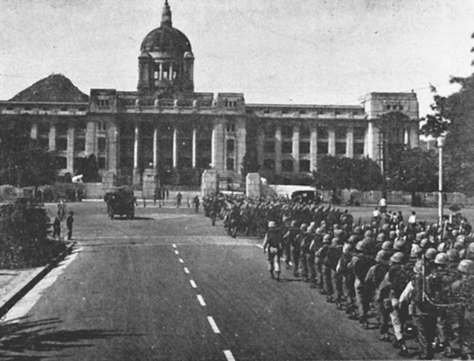
General Park Chung-Hee organized a military coup on 16 May 1961, which led to the dissolution of the Second Republic into a military-backed third republic. The third republic began its rule with the establishment of martial law, which was later relaxed. In 1963, Park left the military to form the Democratic Republican Party and won the presidential election. This way, the Third Republic restored the presidential system, but it was highly influenced by the military authority.
This period was characterized by the initiation of South Korea’s rapid economic growth, often referred to by natives as“Miracle on the Han River”. President Park introduced the five-year economic development plans, which focused on the development of industry, infrastructure, and exports. The relations with Japan were also normalized in 1965, despite public opposition. This normalization helped with the financial aid and loans from Japan.
On the one side, the economy flourished, but on the other side, the political system became more and more authoritarian. Opposition parties existed only in pictures, but in reality, they were frequently suppressed and harassed. Park justified his decisions by speaking about national security, especially highlighting the threats from North Korea.
Park gained even more power and control by the early 1970s. In 1972, he again declared martial law and suspended the constitution, and introduced the Yushin constitutionin order to gain full control over the country; this event marks the transition to a more authoritarian Fourth Republic.
Fourth Republic of South Korea (1972–1981)
In December 1972, after the establishment of the new Yushin Constitution, President Park Chung-Hee nearly gained dictatorial powers. The constitution eliminated the President’s term limits, allowed rule by decree, and severely restricted public freedom. Then the rule had become completely authoritarian. Park took the stand of his decisions by using the measures taken as an attempt to maintain national security against growing threats of North Korea, but it was actually his strategy to gain control over the country.
Despite the political instability, the economy of the nation continued to grow rapidly. Major leading industries included heavy products like steel, shipbuilding, and electronics. However, the costs of industrialization were paid by the labor class of the country as they had to live their lives in harsh conditions, with rising inequality and limited workers’ rights.
Behind the curtains, the opposition to the Park’s rule grew rapidly. Students, teachers, and activists criticized the lack of democracy; this criticism led to public protests in the cities of Busan and Masan. In the very same year, Park was assassinated by his own intelligence chief, Kim Jae-Gyu, turning the whole nation into chaos and putting a full stop to Park’s reign.
Fifth Republic of South Korea (1981–1987)
After Park’s assassination, political instability followed. In December 1979, General Chun Doo-Hwan took power through another military coup, establishing control by 1980. The chance for Chun’s authority to pave the way for the fifth republic was during the suppression of the Gwangju uprising in May 1980, when hundreds of people lost their lives, making it one of the darkest chapters in South Korea’s history.
In 1981, the fifth republic constitution was introduced, making Chun’s rule official. The new constitution only offered limited reforms as compared to the Yushin constitution. While it improved some political conditions and reduced the President’s unlimited power, the system still remained authoritarian, dominated by Chun’s democratic justice party, which had a military background.
Economically, the country continued its remarkable growth, becoming a member of Asia’s “Four Tigers” along with Hong Kong, Singapore, and Taiwan. South Korea’s global image was pretty evident in its planning and organization during the hosting of the 1988 Seoul Olympics. But from the inside, the political inequality, human rights abuses, and corruption continued.
By the mid-1980s, protests demanding democratization gained momentum. Students, workers, and religious leaders formed a broad coalition against military rule. The turning point came with the June Democratic Uprising of 1987, a nationwide movement that forced Chun to make democratic reforms. These reforms led to direct presidential elections and the beginning of the Sixth Republic, a fully democratic system that continues today. And that’s where we will end today’s topic.
Share it with your Family & Friends :