
Writer: Dhavan Aashika Premsingh
Editor: Arpita Jena
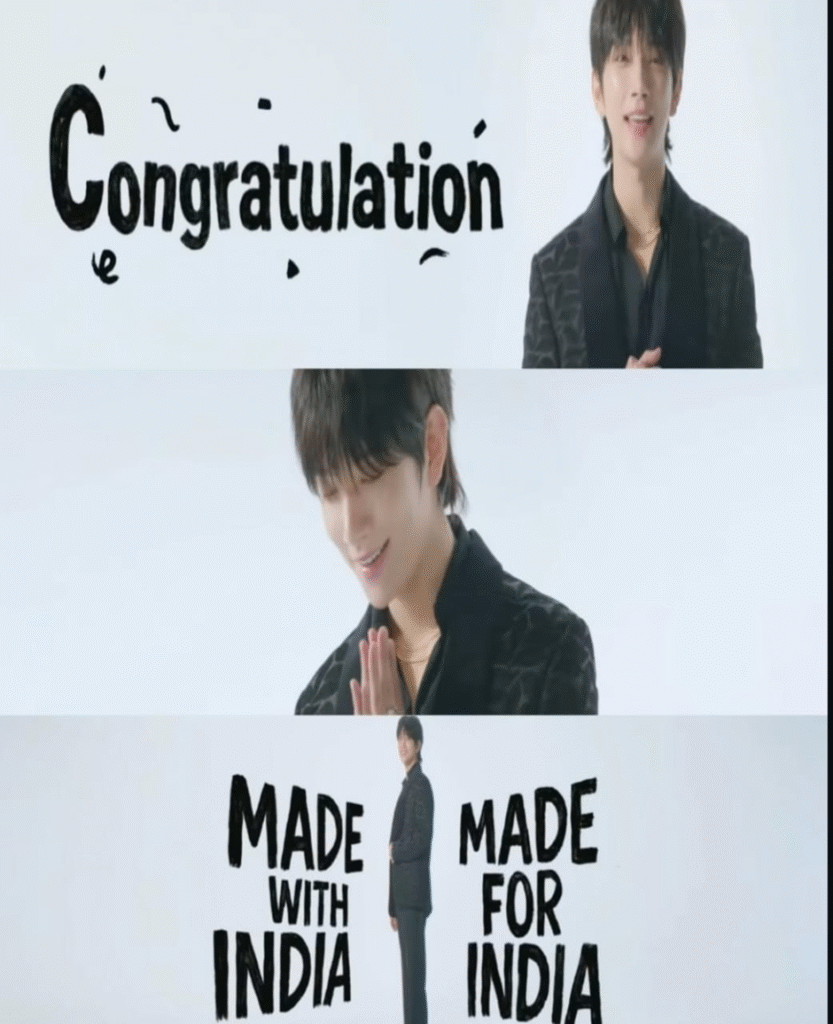
When SEVENTEEN’s Joshua Hong appeared in a video for LG India, fans were excited. It was not just a short message — it showed how K-pop is now part of Indian marketing too. The video became popular quickly and showed how Korean culture connects with Indian fans.
Picture Credit-: namastehallyuofficial (instagram)
LG India recently launched its new Essential Series home appliances. To promote it, they shared a short video message from Joshua. In the video, Joshua smiled, said “Namaste,” talked about LG’s new products, and ended with the line “Har Ghar Appliances, Har Ghar Happiness.”
Even though the video was short, it spread fast on social media. Indian fans of SEVENTEEN shared it everywhere. They made edits, reels, and posts about how happy they were to see a K-pop idol working with an Indian brand. For many fans, it was the first time they saw a major Indian company collaborate with a K-pop artist.
This shows how strong the Korean Wave, or Hallyu, has become. In the last few years, Korean dramas, music, and fashion have become very popular in India. Young people here are following K-pop idols and learning more about Korean culture. LG India clearly saw this trend and used it to connect with younger customers who love global pop culture.
Joshua is a great choice for this kind of campaign. He is known for his kind personality and calm nature. Since he grew up in Los Angeles and speaks English well, he can easily connect with international fans. His polite “Namaste” made Indian fans feel seen and respected. That small act helped LG build a friendly image and reach new customers.
LG is already a big and trusted brand in India. Many Indian homes use LG TVs, washing machines, and fridges. But with this campaign, LG tried to look modern and youth-friendly. By working with a K-pop idol, they gave the brand a fresh and global touch. It made LG look not just like an old brand, but a brand that understands today’s generation.
From a marketing point of view, this was a smart idea. LG didn’t have to spend a huge amount of money on a long advertisement or contract. Instead, one short video message was enough. Because K-pop fans are very active online, the video spread naturally. Fans shared it on their own, giving LG more attention without extra cost.
The message also fit both Indian and Korean culture. The greeting “Namaste,” the Hindi slogan, and the focus on home and happiness all felt local. At the same time, Joshua represented Korean culture and global connection. This mix made the campaign simple but powerful.
For many Indian fans, Joshua’s video felt personal. It showed that K-pop idols notice their Indian audience too. Fans said it was heart-warming to hear Joshua greet them in their language. They felt proud that an Indian company worked with a K-pop artist.
This kind of collaboration may become more common in the future. Many Indian brands are now interested in working with Korean artists because they know how much people love K-pop. Such campaigns can make products feel more special and help brands reach young audiences who spend time on YouTube, Instagram, and other platforms.
In the end, Joshua’s short video for LG India did more than promote home appliances. It built a connection between two cultures, Korean and Indian. It showed how music, language, and business can come together to create something new.
For LG, it brought new attention and excitement to its brand. For Joshua, it showed how far K-pop has spread around the world. And for fans, it was a small but meaningful moment, a reminder that their love for K-pop is being noticed globally.
One short greeting, one warm smile, and one word — “Namaste” — were enough to bring two countries a little closer through the power of pop culture.
Video Credit: NamasteHallyu
Share it with your family and friends: