
writer : Tanvi Rana
Editor: Arpita Jena
Introduction
In today’s fast-changing world, cities are becoming more than physical spaces. They are turning into reflections of human values and emotions. The Seoul Biennale of Architecture and Urbanism, with its theme “Radically More Human,” reminds us that even as we move towards modernity, our cities must keep people at their heart.
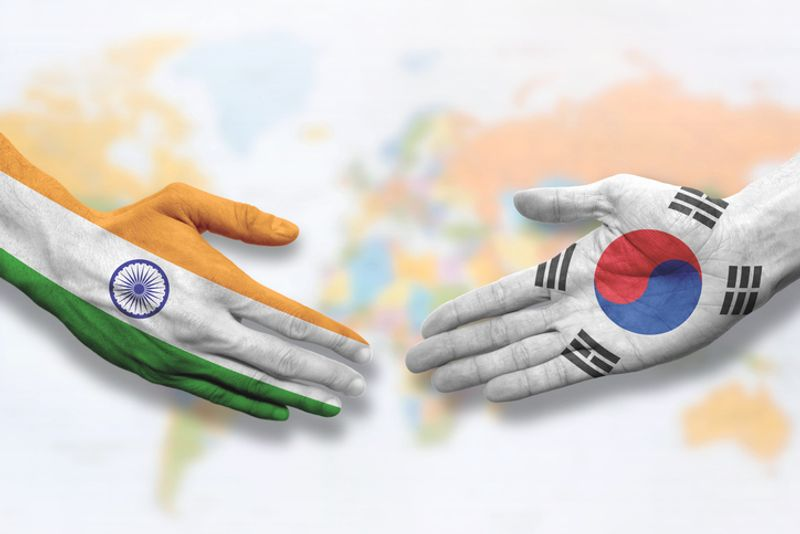
Interestingly, this theme from Seoul connects deeply with India’s own urban journey. Though miles apart, both India and Korea share a unique balance of tradition and technology. Both are nations where culture coexists with innovation, and where architecture is shifting its focus back to people.

Picture Credit: COUNTRY AND POLITICS
Two Countries, One Human Vision
Korea’s cities often symbolise efficiency—clean lines, futuristic buildings and smart technology. Yet behind this modern image lies a warm design philosophy that values human connection. A strong example is the Cheonggyecheon Stream Project, where an old highway was transformed into a peaceful public walkway.
India’s cities may look louder and more chaotic, but the sentiment is the same. Traditional Indian architecture celebrates togetherness—courtyards for families, stepwells for community interactions and temples as social centres. Today, modern Indian cities are blending this emotional architecture with current needs. Projects under the Smart Cities Mission aim to create spaces that are sustainable, inclusive and alive.
Both India and Korea believe that development must serve people—not the other way around.
Shared Challenges, Shared Hopes
Both countries face the global challenge of rapid urbanization. More people are moving to cities every year, which increases pressure on housing, transport and sustainability. But instead of focusing only on speed, both nations now ask deeper questions:
- How do we create cities where people feel they belong?
- How can architecture reflect care, empathy and culture?
In Korea, the Seoul Biennale offers solutions through green spaces, adaptable architecture and designs that support mental well-being. In India, young architects and planners are exploring local materials, community layouts and inclusive public spaces.
Both nations are redefining progress. For them, being “radically more human” means building cities that listen, breathe and remember.
Picture Credit: THE TRIBUNE
Architecture as Cultural Language
The architectural connection between India and Korea is powerful because both cultures express emotion through design.
Korean architecture speaks through simplicity—open layouts, soft light and calm balance. Indian architecture expresses itself through colours, patterns and stories carved in stone. Yet both styles share a respect for heritage and a dream for the future.
This shared vision has led to academic and cultural collaborations. Korean architects participate in Indian design forums, and many Indian students study urban design in Korean universities such as Seoul National University. These exchanges go beyond professional learning—they are cultural dialogues about making cities more humane.
Even in pop culture, this connection is visible. Korean dramas, art and design inspire Indian youth, while Indian craftsmanship fascinates Korean creators. The bridge between the two countries is now cultural, creative and human.
Designing with Empathy
The idea of being “Radically More Human” teaches us that good design is built on empathy.
In both India and Korea, empathy is part of everyday life. Respect for elders, care for community and a sense of belonging shape social interactions. Now, these values are entering architecture too.
A human city is not defined by tall skyscrapers. It is defined by parks where grandparents walk, safe homes for families and public spaces where people feel welcome.
Urban renewal projects in Seoul and community-based housing models in India aim to create these meaningful human experiences.
The Future: Building Together
As both nations grow, collaboration will play a key role. Imagine Indo-Korean projects that blend Korean minimalism with Indian warmth. Or cultural centres where both countries share art, architecture and innovation.
Such partnerships can redefine how the world views progress. Cities of the future may not be the biggest or richest. They may be the kindest.
Conclusion
“Radically More Human” is more than a Biennale theme. It is a reminder of what global cities need today.
India and Korea, though different in geography and rhythm, share a deep human connection. They believe that cities are living stories, filled with memories, emotions and culture.
Their growing collaboration in architecture and design represents something greater than development. It represents hope. A hope that no matter how advanced cities become, they will always make space for people, feelings and the warmth that makes us human.
Share it with your family and friends:
Read More on our Website: