
Writer: Apurva yadav
Editor: Arpita Jena
The Gentle Sweetness of Korean Desserts: Where Tradition Meets Modern Calm
There is a quiet moment in Korea, often in the late afternoon, when the city slows just enough for you to feel it. People step into cafés not only for caffeine, but for comfort. For something soft. Something sweet.

Picture Credit: KIMCHIMARI
Korean desserts do not shout. They whisper. Their magic lies in balance between simplicity and beauty, tradition and innovation. With one bite, time feels slower. The world feels kinder.
When Simple Desserts Become Shared Experiences
Last summer in Hongdae, a long queue wrapped around an entire block. It wasn’t for concert tickets or a celebrity pop-up. It was for tanghulu. Tanghulu is simple. Fresh fruit skewered and coated in glossy sugar. When you bite it, the shell cracks gently. It tastes like childhood, shaped by modern aesthetics.

Picture Credit: ANASTASIA BLOGGER
Sales of tanghulu reportedly increased by over 1,600% in a year, and people still wait 30 to 40 minutes for a perfect strawberry skewer. It proves something important: in Korea, even the simplest food can become a shared ritual. Dessert here is not just eaten. It is experienced.
The Deep Roots of Korean Sweetness
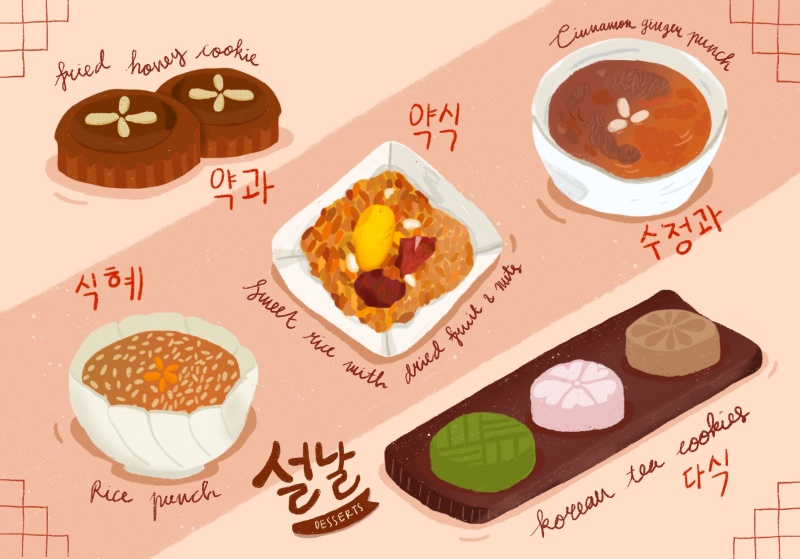
Korean desserts did not begin with trends or Instagram. Long before croffles and Basque cheesecakes, there were tteok (rice cakes) made with seasonal herbs, yakgwa prepared for ancestral rituals, and red bean porridge slow-cooked on winter nights.
Video Credit: NICOLE HONG
Sugar was rare. Sweetness came from nature such as dates, chestnuts, beans, honey, and rice. Every dessert had meaning. It marked a celebration, a season, or respect for family. Even today, when you taste yakgwa or sip sujeonggwa, it feels like tasting history. Recipes passed down through generations still carry emotional weight.
Reinvention Without Losing Identity
Korea never stops evolving, and desserts are no exception. Modern cafés treat desserts like fashion. They are seasonal, creative, and visually striking. Yet restraint remains key. Flavours are rich, but never overwhelming.
Picture Credit: KOREA.NET
A cheesecake looks dramatic, but tastes light. A croffle is buttery, yet balanced. This restraint reflects a core Korean value: beauty should comfort, not overpower.
Inside Seoul’s Café Culture
Walk into any café in Seoul today and you will understand. You might find:
- Matcha Basque cheesecakes with a bitter edge
- Strawberry milk in soft pastel tones
- Bingsu shaved so finely it melts like snow
When croffles first appeared, some cafés reported over 300% growth in sales within months. Yet beneath these trends, traditional flavours remain—black sesame, injeolmi, mugwort, and chestnut. Innovation thrives, but roots are never forgotten.
Seongsu: Seoul’s Dessert Laboratory
Seongsu has become Seoul’s unofficial dessert testing ground. Every street hosts cafés with unique identities. One is known for burnt cheesecakes with deep caramel notes. Another for milk teas topped with handmade pearls.
Despite the visuals, desserts are never heavy. Koreans do not chase sugar highs. They chase harmony. Dessert is a pause. A breath after a long day.
Desserts for One: A New Kind of Comfort
Dessert culture has also changed how people eat. Bingsu, once shared in large bowls, is now sold in perfectly portioned single servings. Convenience stores offer personal bingsu cups for those who enjoy eating alone.
Mega Coffee reportedly sold over five million individual bingsu cups in a single season. What once symbolised family time now reflects self-care and quiet independence.
Gen Z and the Return of Tradition
Something unexpected is happening. Traditional desserts are making a comeback, led by Gen Z. Yakgwa, once seen as old-fashioned, surged in popularity. Sales rose by nearly 40%, and cafés began reinventing it as donuts, ice-cream sandwiches, and cookies.
This revival is not ironic. It is sincere nostalgia, refreshed for a new generation.
Seasons You Can Taste
Korea takes seasonality seriously. When February arrives, the country turns into a strawberry celebration. Cafés, bakeries, and department stores compete to create seasonal desserts.
One major strawberry festival attracted over 12 million visitors, proving that this is not just marketing—it is affection. Korea does not simply eat strawberries. It celebrates them.
Cafés as Emotional Spaces
Korean cafés are designed to build moments. Soft lighting. Minimal interiors. Calm music. Desserts plated so beautifully you hesitate before taking the first bite.
Themes change often. A café in Yeonnam might be floral this month and cat-themed the next. Reinvention is constant, and dessert culture grows with it. Even convenience stores play a role. GS25’s premium dessert line reportedly earned ₩10 billion in one year, showing that sweetness can feel special anywhere.
When Aesthetics Are Not Enough
Not every trend survives. Some cafés open only for visual appeal and close quickly when taste fails to match beauty. This self-correction keeps standards high. In Korea, a dessert must have soul to last.
Why Korean Desserts Stay With You
At its heart, Korean dessert culture is about emotion. It is a slice of cake after a stressful workday. An injeolmi bingsu eaten alone on a heavy night.
A tanghulu bought on impulse because its shine made someone smile. Korean desserts offer sweetness without noise, beauty without excess, and modernity without losing the past.
Even in a fast world, they remind us of the power of gentleness. And maybe that is why their sweetness lingers long after the last bite melts away.
Share it with your family and friends:
Read More on our Website: