
Writer: Devinandana RK
Editor: Arpita Jena
Introduction
Have you ever wondered how your favorite K-pop idol looks so flawless on stage? Behind the spotlight, years of discipline and intense preparation shape every performance.
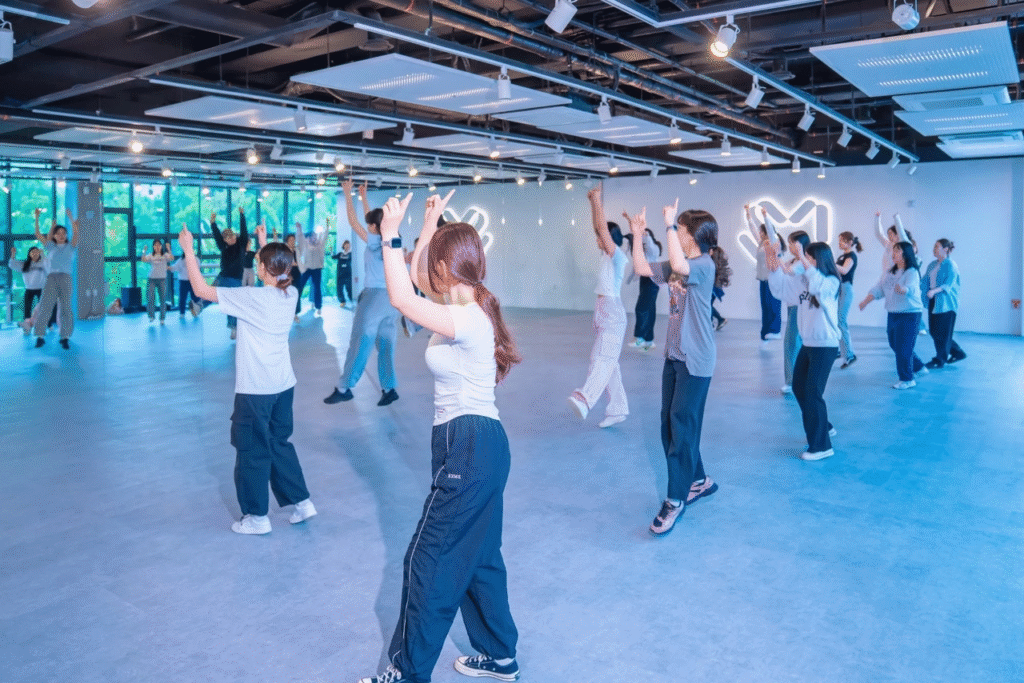
Picture Credit: THE KOREA HERALD
For many young Koreans, entering the K-pop industry represents a lifelong dream. However, beyond glamour and success lies a demanding training system. Unlike many countries, South Korea views K-pop as a matter of national pride. Moreover, it is like a long-term cultural and economic investment.
This article explores how Korea’s trainee system carefully transforms teenagers into global stars.
Understanding the K-Pop Trainee System
Young aspirants join entertainment companies through auditions to become trainees. South Korea hosts several major agencies such as HYBE (BigHit), YG Entertainment, and JYP Entertainment. These companies invest heavily in education, accommodation, and skill development.
In many cases, trainees join as early as 12 or 13 years old. From the very beginning, they are trained not only as singers or dancers but as complete global performers. As a result, professionalism is instilled at a young age.
The training period usually lasts between two and ten years. However, no guarantee of debut exists. Consequently, trainees face constant pressure and uncertainty while striving to meet strict K-pop standards.
Beyond Singing: Multi-Skill Training
K-pop training focuses on developing versatile artists. First, vocal lessons include breathing techniques and pronunciation coaching. In addition, dance training plays a crucial role.
Trainees practice various styles such as hip-hop, contemporary, and jazz. Notably, synchronized performances have helped K-pop gain worldwide popularity. Furthermore, rap training is also emphasized, as it remains a key element of the genre.
Language training is equally important. Most trainees learn English, Japanese, and sometimes Chinese. Therefore, interview skills and global communication improve significantly. In short, raw talent is refined into polished artistry.
Life Inside the Practice Rooms
Surviving the trainee phase is extremely challenging. Not everyone manages to endure the pressure. Becoming a global icon requires discipline, consistency, and mental strength.
Video Credit: CNA INSIDER
Trainees live together in dormitories provided by their companies. They follow strict schedules, maintain controlled diets, and adhere to behavioural guidelines. Meanwhile, executives and trainers closely monitor their progress.
Monthly Evaluations and Elimination
Every month, trainees undergo evaluations conducted by choreographers and vocal coaches. These assessments focus not only on talent but also on attitude, teamwork, and resilience.
Those who fail to meet expectations may be eliminated. Meanwhile, successful trainees continue training under even higher pressure. As a result, they learn to accept criticism and improve continuously. Ultimately, this process creates confident and stage-ready performers.
Preparing for the Global Stage
Since trainees receive multilingual training, connecting with international audiences becomes easier after debut. For instance, groups like BTS and BLACKPINK demonstrate exceptional professionalism during global interviews.

Picture Credit: PELAGO
Additionally, many K-pop artists blend pop, hip-hop, and R&B with Korean elements. BLACKPINK’s international collaborations have expanded their global reach. Thus, the training helps the trainees to understand cross-cultural expectations without losing their identity.
Multinational and Multilingual Line-Ups
Recently, more international artists have joined K-pop through global auditions. Artists such as Sriya Lenka from India highlight Korea’s growing interest in global talent.
However, all international trainees follow the same rigorous system, including mastering the Korean language. Consequently, diverse line-ups enhance K-pop’s global appeal while preserving its cultural roots.
Meeting K-Beauty Standards
Visual appeal remains an essential part of K-pop. Therefore, companies include skincare, styling, and overall grooming as part of the training program. In some cases, they also suggest cosmetic procedures such as rhinoplasty or eyelid surgery to meet industry standards. Although controversial, these practices reflect the industry’s emphasis on perfection and presentation.

Picture Credit: THE KOREA HERALD
Conclusion
Debuting as a K-pop idol is a hard-earned achievement. K-pop’s global success is not accidental; instead, it is the result of a highly structured training system. More importantly, the system emphasizes resilience, teamwork, and dedication. Hence, K-pop idols are not simply discovered, they are carefully built as cultural ambassadors of the nation.
Share it with your family and friends:
Read more on our website: