
Writer : Apurva Yadav
Editor: Arpita Jena
Introduction
South Korea has become one of Asia’s top study destinations. In just the last decade, it has grown into a global education hub. Students are drawn by its strong universities, advanced technology, and rich cultural life.
Picture Credit: LinkedIn
The country also reached a major milestone. By August 2025, South Korea hosted over 305,000 international students. This exceeded the government’s Study Korea 300K Project target. The number continues to rise each year, showing growing global trust in Korean education.
For many students, studying in Korea is not only about academics. Part-time work plays a major role in daily life. It helps students manage living costs, improve their Korean, and gain real-world experience. This article explores how international students work part-time in Korea, the legal rules, job trends, platforms, and a real student story.
Legal Rules for Student Part-Time Work
Most international students in Korea hold either a D-2 visa (degree programs) or a D-4 visa (language and training programs). These visas allow part-time work, but only with permission.
Therefore, students must first get approval from their university’s international office. After that, immigration grants work permission. During semesters, students can work up to 30 hours per week. During vacations, they can work longer.
Students must always follow visa rules. Working without permission can lead to fines or visa cancellation.
Common Part-Time Jobs for International Students
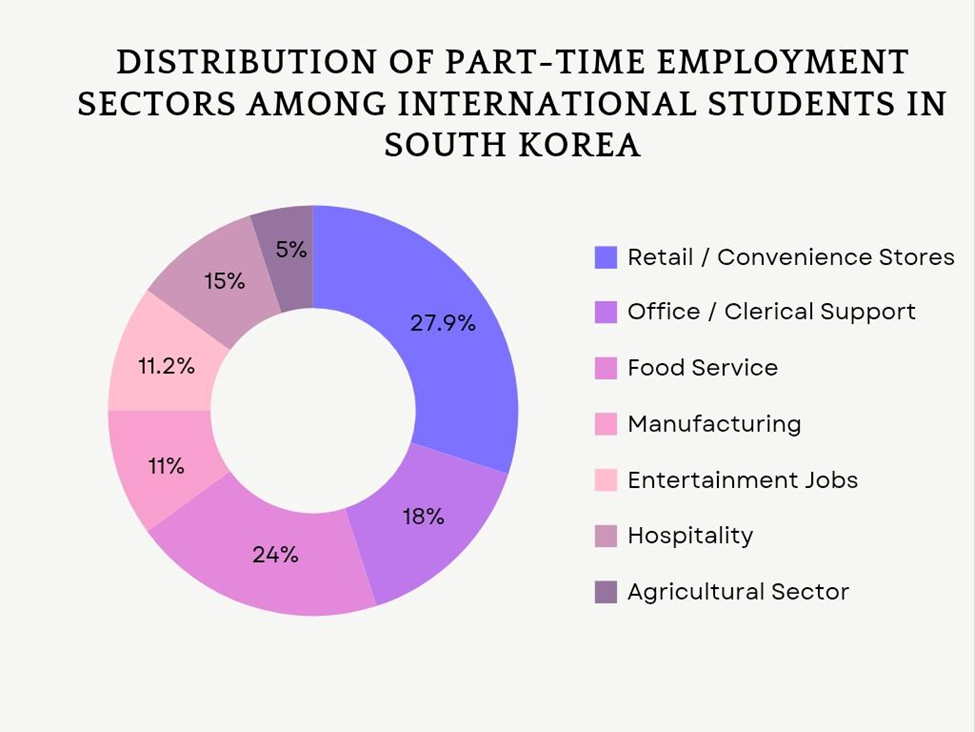
International students usually work in jobs with flexible hours and simple skill requirements. The most common sectors include:
Food and Beverage
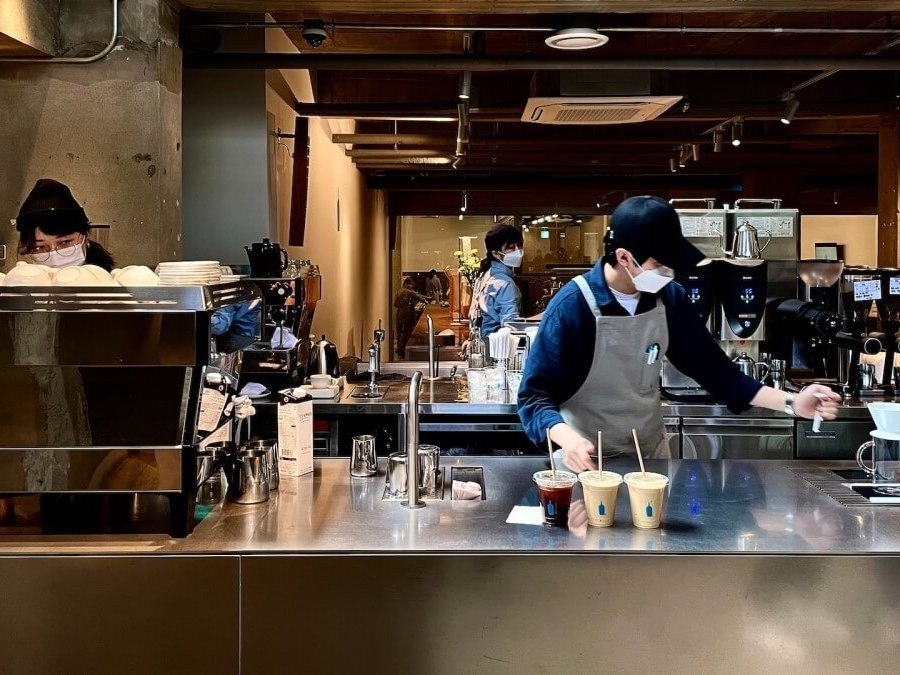
Students work in cafés, restaurants, and bakeries as servers, kitchen helpers, or cashiers.
Retail
Many students work in convenience stores, clothing shops, or small supermarkets.
Tourism and Culture
Some work at museums, tourist centers, or cultural sites.
University Jobs
Students may work as library assistants, office helpers, or research assistants.
Hospitality and Cleaning
Hotels, hostels, and guest houses also hire international students.
These jobs help students earn money and practice Korean daily.
Source : Apurva: Own analysis
Rising Demand for Student Workers
The number of international students working part-time has grown quickly. Between 2022 and 2024, foreign workers in the food and service sector increased by over 22%. During the same period, the foreign student population rose by more than 30%.
Many Korean young people now avoid service jobs. As a result, international students fill these positions, especially during evenings and weekends.
A Ministry of Education survey showed that 42.5% of foreign students want to work in Korea after graduation. Another 55.1% already work in the area where they study. This shows that part-time jobs often lead to future careers.
However, many students still work without official permission. This happens because some do not understand the rules or find the process difficult. Universities now try to improve awareness and support.
How Students Find Part-Time Jobs
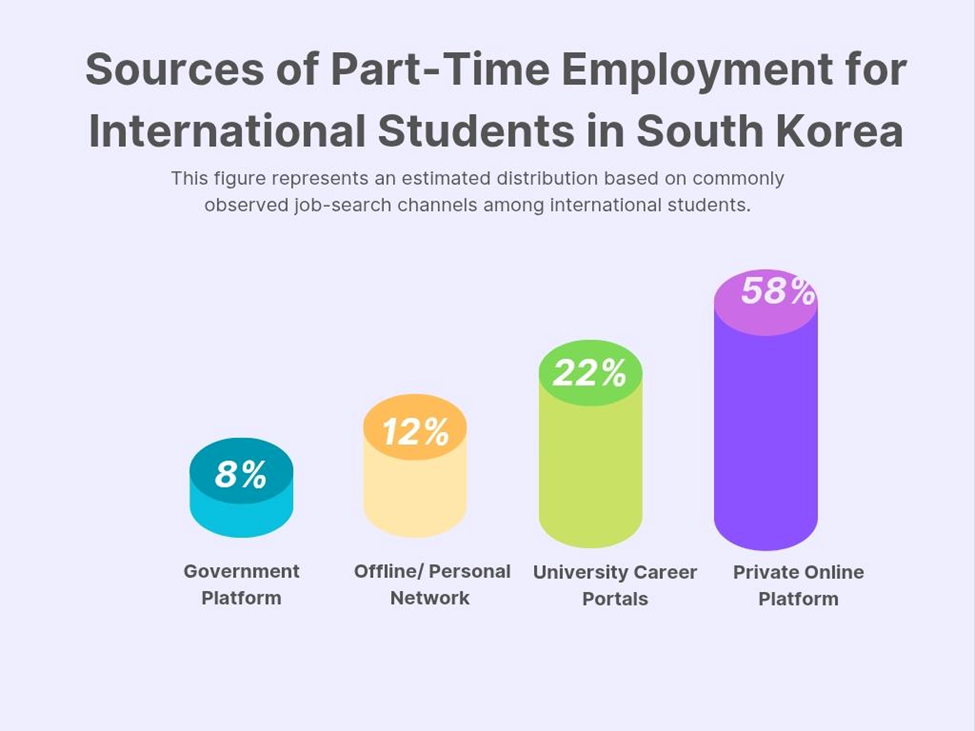
Finding part-time work in Korea has become easier through digital platforms.
The most popular platforms include:
Dongnealba (동네알바) – Shows local jobs near your location
Albamon (알바몬) – One of Korea’s largest part-time job sites
Alba Heaven (알바천국) – Widely used for retail and service jobs
University Job Boards – Many universities post student-friendly jobs
K-Work – A government platform for foreign workers
Students also find jobs through Facebook groups, KakaoTalk chats, and personal connections.
Source : Apurva: Own analysis
A Student’s Experience
To understand real student life, I spoke with Anna, a graduate student at Ajou University. She holds a D-2 visa and works two jobs. She works as a waitress at a Korean BBQ restaurant and as a university assistant.
Anna said her scholarship helped, but it did not cover rent, food, and transport. Part-time work gave her financial freedom and peace of mind.
She found her restaurant job through Dongnealba. The app helped her locate nearby jobs that fit her schedule. She also said her university helped her complete the legal work permit process.
At first, speaking Korean at work was difficult. Customers spoke fast and used slang. Over time, her listening and speaking improved. The job became a real-life language classroom.
Balancing work and studies was not easy. Exam weeks felt exhausting. Still, Anna learned to manage her time better. She now feels more confident and independent.
For her, part-time work is not just about money. It helps her feel connected to Korean society.
Benefits and Challenges
Benefits
- Helps pay rent, food, and transport
- Improves Korean language skills
- Builds work experience
- Encourages cultural integration
Picture Credit: KOREA JOONGANG DAILY
Challenges
- Long working hours
- Stress during exams
- Complex visa rules
- Limited job types
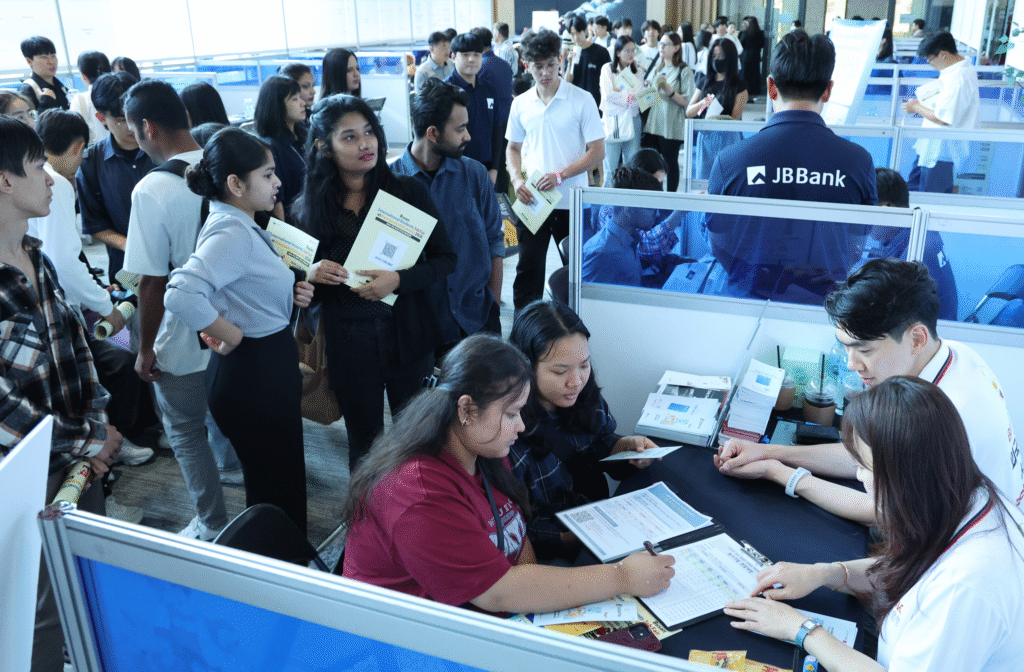
University support plays a key role in helping students succeed.
Conclusion
Part-time work has become a major part of international student life in South Korea. Rising student numbers and labor shortages have increased job opportunities.
These jobs offer financial support, language growth, and cultural exposure. At the same time, students must understand the rules and manage their time well.
As Korea attracts more global students, strong job policies and university support will remain essential. With the right guidance, part-time work can turn into a powerful stepping stone for future careers.
Share this with your family and friends:
Read more on our website:
This is such a practical and helpful resource! Finding work as an international student can be daunting, but this guide breaks it down so clearly. Thank you for sharing these tips for the student community!
Got basic details about part-time jobs for international students. Thank you.✨
This is a very helpful and practical guide for international students. It provides clear information and useful tips about part-time jobs in Korea. Great resource for students planning to study abroad!
Part-time Jobs for Students
“Super helpful guide for students—clear, practical, and exactly what’s needed!”
Very useful information for students! It nicely explains how part-time work supports both learning and daily life in Korea
Very insightful and practical. A great overview of student life and part-time work in South Korea.
Thank you so much for this article. It has helped me so much gaining knowledge about korean part time jobs.
This was a very informative and engaging read.
Good source of information for students who are studying or planing to stay in in South korea .