
Writer: Apurva Yadav
Editor: Arpita Jena
Every Country Has Its Exam Season
Every country has days when the young carry the weight of the world on their shoulders.
In India, we recognize it instantly during board exams, NEET, or JEE those strange weeks when an entire household rearranges itself around one child. Fans run on low speed, televisions stay muted, neighbors speak softly, and even laughter feels slightly guilty. Anyone who has grown up here understands that familiar exam-season silence, when families hold their breath without saying a word.
South Korea experiences something similar but on an entirely different scale. What Indian families feel within their homes, South Korea feels across its entire nation.
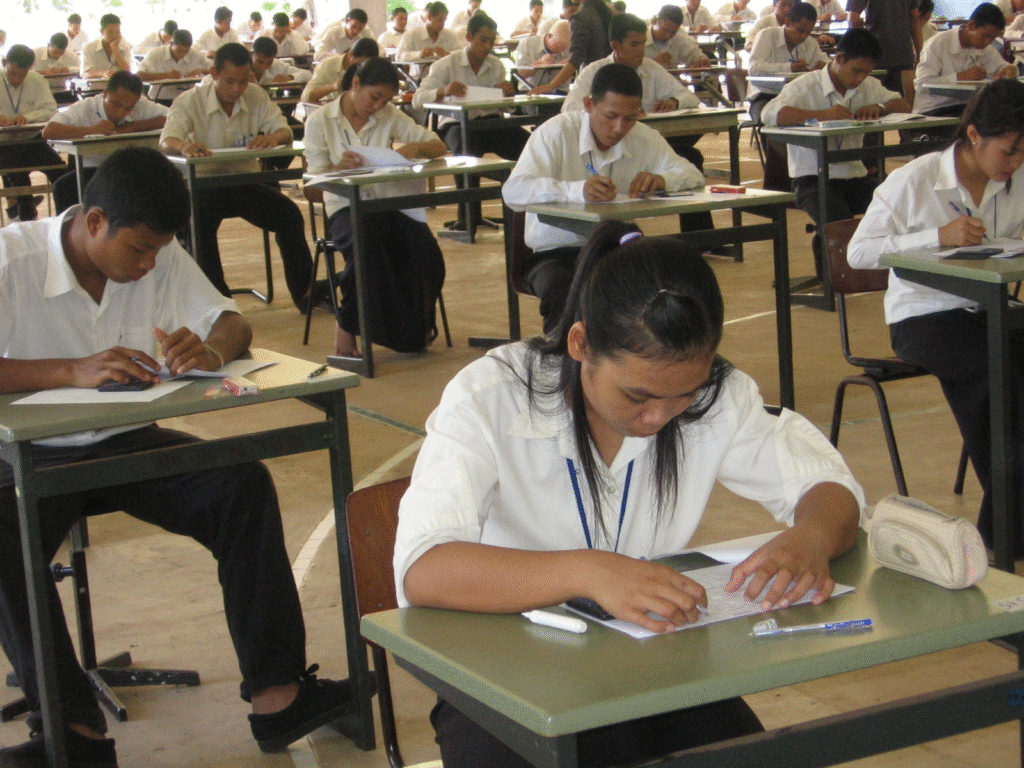
Picture Credit: WIKIPEDIA
The Day the Nation Pauses
Each November, for just one day, South Korea seems to slow down almost as if it is exhaling very carefully.
Buses continue to run, but they sound softer. Parents stand outside school gates with folded hands, whispering prayers into the cold morning air. Airports delay or reschedule flights so that engine noise does not disturb the listening section of the exam. Offices adjust working hours, and even stock markets open later.
All of this happens because of one exam: the College Scholastic Ability Test (CSAT), known locally as Suneung. To someone unfamiliar with it, the scale of this day may sound dramatic. But South Korea’s relationship with education was not built during times of comfort.
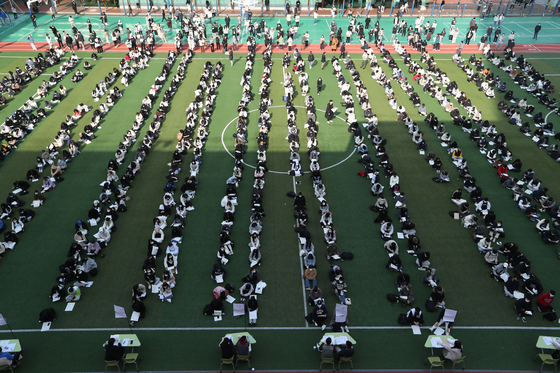
Picture Credit: korea joongang daily
How CSAT Came to Exist
South Korea’s modern education system emerged from hardship such as war, poverty, and national rebuilding. For the country, education became a promise of stability and progress.
The CSAT did not appear overnight. It is the result of decades of reform. In the 1960s, South Korea used the University Entrance Qualification Exam. During the 1980s, this shifted to a two-stage Preliminary Test and University Entrance Test system, which was later criticised for inconsistency, corruption, and unequal access.
After intense national debate on fairness and equality, the current CSAT format was introduced in 1994. Reforms between 1991 and 1993 aimed to create a single, standardized exam that would minimize personal bias, bribery, and institutional influence. In theory, the idea is simple: one test, one day, the same rules for everyone.
Meritocracy in Theory, Inequality in Reality
On paper, CSAT represents one of the purest forms of meritocracy. There are no interviews, personal essays, or extracurricular profiles—only questions and answers. In real life, however, equality remains complicated.
Some students grow up studying in quiet rooms with good lighting and years of access to expensive private academies known as hagwon. Others revise in crowded homes, sharing space with siblings, relatives, and household responsibilities. While some families can afford multiple tutors, others rely entirely on school teachers and borrowed study materials. The exam may be the same for everyone, but the journey toward it is not.
A Culture of Relentless Preparation
Each year, nearly 450,000 to 550,000 students sit for the CSAT. Many begin preparing years in advance. A typical day stretches endlessly school in the morning, a quick dinner at home, then long hours at hagwon late into the night. Even after returning home, many students reopen their notebooks to revise what they learned earlier.
You can almost picture the scene: rows of teenagers under harsh white lights, shoulders slightly slumped, eyes tired but determined. Some rub their temples. Some chew the end of a pencil. Others stare at a formula, hoping it finally makes sense.
Alongside this effort are the quieter sacrifices of parents cancelled outings, lowered voices, postponed vacations, and carefully tightened budgets, all in the hope of giving their child one more opportunity.
When the Whole Country Holds Its Breath
On exam day, the nation’s heartbeat seems to shift. Students walk toward testing centres wrapped in scarves, warming their hands with their breath, pretending calm. Parents wait outside with snacks, heat packs, and whispered blessings. Police officers escort late arrivals on motorcycles or patrol cars so they can reach the gate before it closes.
When the listening section begins, even the skies comply. Airport takeoffs and landings are paused. For a brief moment, an entire country leans in and listens with its students.
Share it with your family and friends:
Read More on our Website: