
WRITER : ARCHANA K
EDITOR : SHIVRAJ PATEL
Tteokbokki, a popular Korean dish made with chewy rice cakes in a rich, flavorful sauce, is more than just a favorite street food. Tteokbokki has a history rooted, evolving from a royal delicacy in the palaces of the Joseon Dynasty to a spicy, affordable comfort food enjoyed by millions today. The story of Tteokbokki reflects Korea’s culture, creativity, and the resilience of Korea’s people.
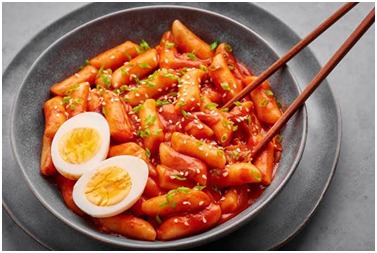
Picture Credit: Asian Inspirations
The earliest version of tteokbokki, known as gungjung tteokbokki, originated during the Joseon Dynasty (1392-1897). Unlike the fiery red version we see today, this dish was soy sauce-based. At the time, red chili peppers and gochugaru (chili powder) were not yet widely used in Korean cuisine. The royal version was prepared with garaetteok (long white cylindrical rice cakes) stir-fried in soy sauce along with beef, vegetables, mushrooms, and sesame oil. It was considered a luxurious dish because soy sauce itself was a precious ingredient. Gungjung tteokbokki symbolized elegance and refinement, served in the royal courts as part of banquets and feasts. Even today, this milder version is enjoyed, particularly by those who prefer a savory, non-spicy flavor. It serves as a reminder of how tteokbokki first emerged as a high-class dish before finding its way to ordinary households.
The Birth of Spicy Tteokbokki:
The modern spicy version of tteokbokki appeared much later, in the mid-20th century. After the Korean War (1950-1953), food shortages were widespread, and Koreans began to adapt their cuisine to what was available. Around this time, gochujang (Korean red chili paste) became more popular and affordable, adding heat and depth to many traditional dishes.
According to popular stories, the invention of spicy tteokbokki is credited to a woman named Ma Bok-rim, who participated in the opening of a Korean-Chinese restaurant at Sindang-dong, Seoul, during the 1950s. She said that she accidentally dropped rice cakes into a pot of gochujang and discovered the delicious combination. Her version quickly gained popularity, especially among students and workers, because it was incredible, filling, and bursting with bold flavors. Sindang-dong soon became the birthplace of modern tteokbokki street food culture, and it remains famous today as the “Tteokbokki Town” of Seoul, where numerous restaurants specialize in variations of the dish.
Evolution and Modern Variations:
Over time, tteokbokki has undergone countless transformations. The basic elements remain the same – rice cakes simmered in sauce – but the toppings and flavors have expanded to suit changing tastes.
Different types of Tteokbokki:
- Classic Spicy Tteokbokki: Made with rice cakes, fish cakes (eomuk), boiled eggs, and scallions in gochujang-based sauce.
- Cheese Tteokbokki: A fusion favorite where melted cheese balances the spiciness.
- Seafood Tteokbokki: This Tteokbokki is made with shrimp, squid, or mussels.
- Cream or Rose Tteokbokki: A modern twist mixing spicy gochujang with creamy sauces for a spicier yet milder, trendy flavor.
Today, tteokbokki can be found everywhere at street stalls, school cafeterias, trendy cafes, and even fine dining restaurants. Everyone loves tteokbokki. Packaged instant versions are also sold worldwide, making it one of Korea’s most iconic comfort foods.
Tteokbokki is not just a dish – it’s a symbol of Korean resilience and creativity. From its royal beginnings to its transformation during Korea’s post-war recovery, it reflects how Koreans turned hardship into innovation. Its popularity on the streets of Seoul in the 1960s and 1970s also represents the rise of youth culture, as students gathered around food carts to share spicy rice cakes while discussing dreams and ideas. Tteokbokki was brought by restaurateurs to North Korea in 2017 and became a popular dish there.
Today, tteokbokki continues to be a bridge between generations — a nostalgic food for older Koreans and a trendy snack. Also, tteokbokki is my most favorite food in Korean cuisine. It has also become a global ambassador of Korean cuisine.
Share it with your Family & Friends :