
Writer:- ALISHA NAAZ
Editor:- SHIVRAJ PATEL
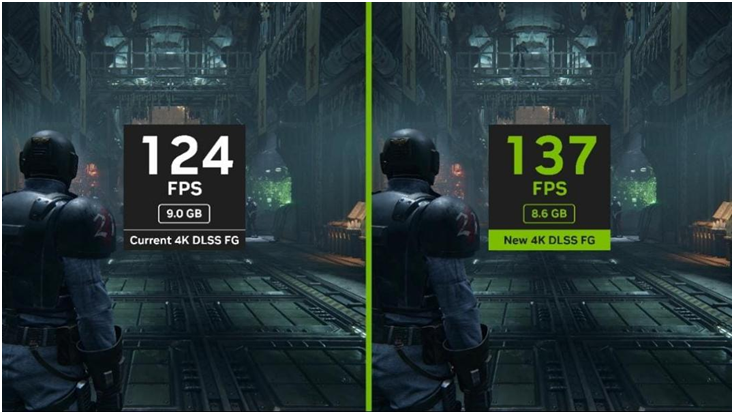
DLSS 4 Multi-Frame Generation – Performance Display
Credit: NVIDIA (nvidia.com)
Digital video processing is going through a groundbreaking change that is mainly fueled by the advancements which considerably improve the visual aspect of gaming. These inventions not only increase graphics accuracy, performance, and interactivity but also tremendously enhance user participation, thus enabling a more profound feeling of the gaming world to be experienced.
Gaming Chaxnges the Use of Digital Video Processing
The digital video processing industry has a concept that covers various operations aimed at the improvement of video quality and performance. All these refer to real-time rendering, image upscaling, dynamic lighting adjustment, and gaming interaction. The result of these methods summed is going beyond previous interaction limits.
If we take NVIDIA’s Deep Learning Super Sampling (DLSS) as a case in point, it can be seen that this technology employs machine learning to restore the clarity of the originals approximately in real time while it creates the low-resolution versions of the graphics without losing the speed so it can be used in real-time graphics-intensive applications.
The use of ray tracing has also become a very important means to uplift game graphics. By realistically simulating light, ray tracing offers the most accurate shadows, reflections, and lighting effects in the computer-generated worlds. On the other hand, it is quite expensive in terms of the hardware needed to support it such as high-end graphics cards are usually the case to obtain good quality and frame rates.
AI-Powered Enhancements: DLSS and Ray Reconstruction
NVIDIA’s DLSS accelerates the process of rendering by upscaling low-res inputs and at the same time retaining all the details and thus achieving a high-res image. The addition of Multi-Frame Generation in DLSS 4 permits the maximum fps to be multiplied by eight, which consequently makes 4K 240 fps fully ray-traced gaming attainable even on a mid-range PC.
Moreover, DLSS 4 includes Ray Reconstruction which is an AI-based method for the polishing of ray tracing effects that lessens noise and renders lighting and reflections more accurate. The adoption of DLSS along with Ray Reconstruction empowers developers to create beautiful, massive titles while also considering a larger number of possible PC setups.
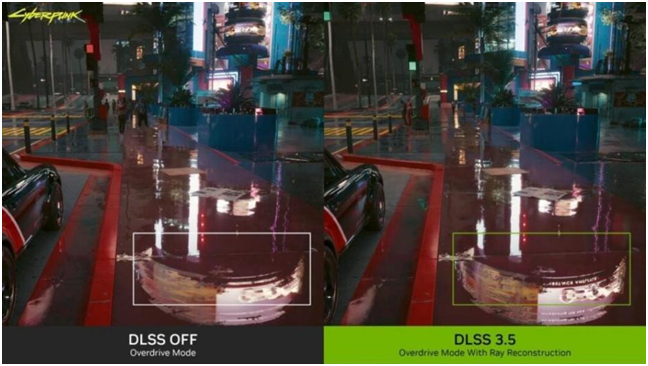
DLSS Ray Reconstruction Integration in Game Scene
Credit: NVIDIA Developer Blog (developer.nvidia.com)
Foveated Rendering: Virtual Reality Performance Optimization
Foveated rendering assigns the rendering work associated with the high resolution, high quality images to the area where the player is looking by using eye-tracking data. Thus, the method does not lose the visual quality and it especially fits VR (Virtual Reality) applications very well. Consequently, the smoother and more responsive VR experiences like Meta Quest Pro and PlayStation VR2, rely on this particular technology.
True software-coded foveated rendering has been supported by NVIDIA for a while now. It operates at the driver level and is applicable, without any limitation, to virtually any game.
Interactive Generative Video: The Future of Game Development
The new methods of video creation have changed the face of Generative Game Engines (GGE) radically with the help of Interactive Generative Video (IGV). This feature allows developers to build vast interactive game worlds that evolve naturally in response to the player´s actions, thus almost completely doing away with pre-rendered assets and unlocking an infinite variety of creative possibilities.
If the IGV technology is applied to the development of games, it becomes easier to make content more diverse and interesting, thus, creating chances of remaining playable, and increasing player’s excitement. The step away from the traditional methods towards procedural content generation system mark.
Share it with your Family & Friends :