
Writer : Apurva Yadav
Editor: Arpita Jena
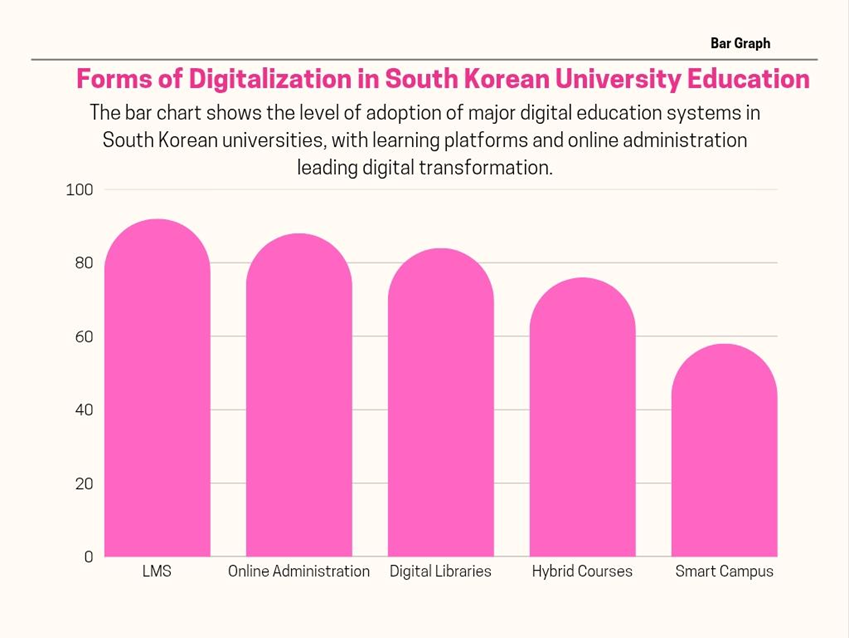
Source : Apurva: Own analysis
Introduction
Over the past two decades, higher education systems worldwide have undergone profound transformation as a result of rapid technological advancements. As a result, digitalization has not only reshaped the delivery of knowledge but has also significantly altered the ways in which students interact with universities, faculty members, and academic resources. Within this global context, South Korea emerges as a prominent leader among Asian countries due to its advanced digital infrastructure and widespread technology usage. Consequently, this technological strength is strongly reflected in the country’s higher education system. Moreover, the digitalization of higher education in South Korea has played a crucial role in attracting international students by offering enhanced accessibility, increased flexibility, and comprehensive academic support.
As South Korea strives to position itself as a globally recognized educational hub, digital technologies have been widely adopted across universities to accommodate the growing international student population. In particular, the Korean higher education system is highly structured and extensively digitalized, ranging from sophisticated learning management systems to hybrid learning models and fully online administrative processes. Thus, technology has become a driving force in shaping the overall educational experience. Additionally, these developments have positively influenced the academic engagement of international students, facilitated the learning of the Korean language, and supported their gradual adaptation to a foreign education system.
Against this backdrop, the present paper analyzes the digitalization of education in South Korean universities with a specific focus on international students. It further examines the digital infrastructure of Korean universities, including online and hybrid learning models, language accessibility, administrative digitalization, and the expanded academic opportunities available to international learners. At the same time, the paper briefly highlights the challenges that continue to exist within this digital framework.
Digitalization in Higher Education
In general terms, digitalization in higher education refers to the comprehensive integration of digital technologies across learning, administration, research, and student services with the aim of improving efficiency and accessibility. In the case of South Korea, digitalization extends far beyond the provision of online lectures; rather, it encompasses the use of digital tools and platforms throughout the entire academic journey of a student.
For the sake of better understanding, South Korea’s university digitalization can be divided into five broad categories:
- Online Admission and Administrative Systems
- Online and Blended Learning Platforms
- Digital Learning Management Systems (LMS)
- Digital Libraries and Research Resources
- Smart Campus and Student Support Technologies
Each of these categories has a specific impact on the academic life of international students.
Online Admission and Administrative Systems
The university admission process is one of the initial interactions for foreign students. The admission and application processes of South Korean universities have been digitized to a large extent. This allows access to international students with less trouble.
It is now the case that the vast majority of universities have complete online application portals where students can:
- Send academic papers digitally
- Check the progress of their applications at any time
- Get the results of their admissions through electronic means
- Put up documents regarding their visas
- Do online registration for courses and housing
However, Government websites like Study in Korea and individual university portals provide easy access to information about the courses, scholarships, and language requirements. Therefore, this not only lessens the need for physical documents but also opens up the world to international applicants.
The global learners will benefit from this technological advancement. In the areas of reduced application costs, quicker decision making, and increased transparency in admissions.
Online and Blended Learning Platforms
There is a major shift to online and mixed teaching methods at the university level in South Korea. Blended learning is the merging of face-to-face.
Moreover, classroom instructions and online learning, offering students the possibility to choose their preferred learning method while still receiving the same high-quality education.
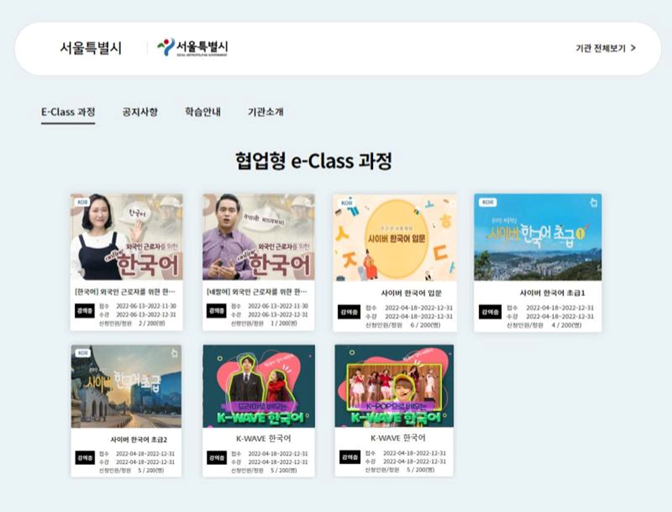
Picture credit : Korea.net
The main types are:
- Complete online degree and certificate programs
- Hybrid courses with live lectures plus viewed content
- Virtual exchanges and joint online courses with foreign university partners
- The top three universities in Korea-Seoul National University, KAIST, and Korea university
For the international students, these avenues mean:
An early acquaintance with Korean academic culture
A chance to earn credits from a distance
Uninterrupted academic activities during travel or visa delays
Educational access in Korea without the necessity of total move.
Learning Management Systems (LMS)
The Learning Management Systems are essential to the electronic and computer-based education that is offered in South Korea universities. Nearly all universities use one or the other of the three centralized LMS platforms: Blackboard, Moodle, or locally developed ones.
Besides the main functions, such digital systems may also offer:
- Lectures streamed live and recorded
- Submission of assignments and grading
- Online tests and quizzes
- Tracking of attendance
- Forums for discussions, announcements, and notifications
However international students find it easy to cope with language and adjustment problems since LMS platforms provide them with:
- Access to recorded lectures multiple times
- Learning with no strict time constraints
- Online feedback from professors
- Performance in studies being monitored easily
Additionally, a standardized LMS across departments promotes uniformity in the learning experience, thus supporting foreign students in adapting smoothly, regardless of their prior academic background.
Digital Libraries and Research Resources
Over the years, South Korea has made significant strides in the arena of digital academic infrastructure, particularly in research and library services. As a result, the university library sector has reached an advanced stage wherein academic materials are made available to users online. Consequently, dependence on physical resources has been reduced to a great extent.
The digital library services are as follows:
- E-journals and academic databases
- Online thesis and dissertation archives
- E-books and digitized course readings
- Remote access to international research databases
Platforms like RISS (Research Information Sharing Service) and DBpia provide the students the access to the Korean and the international academic publications from any location.
Digital libraries are of special interest to the international students as they:
They do not have to worry about the physical access being restricted.
Research in both English and Korean languages.
Scholars can work on their thesis and learning independently.
Researchers can do interdisciplinary research.
Therefore this digitization of access reinforces the academic equality between the local and the international students. International students find it easy to cope with language and adjustment problems since LMS platforms provide them with:
Access to recorded lectures multiple times
Learning with no strict time constraints
Online feedback from professors
Performance in studies being monitored easily
In addition, it is the same LMS system which makes the experience of learning uniform across departments, thus facilitating the foreign students’ adjustment regardless of their academic background.
Smart Campus and Student Support Technologies
The development of “smart campus” systems that digitally manage student life and academic support services has taken place in South Korean universities beyond the confines of classrooms and libraries.
Among these systems are:
- Mobile university applications for managing schedules and getting notifications
- Electronic student ID cards
- Counselling and mental health services available online
- Al-powered systems for academic advising
- Cashless transactions at the campus
Multilingual interfaces, automated reminders, and real-time communication with university offices are some of the things that international students can take pleasure in. The use of digital student support lessens the confusion resulting from administration and enhances the overall integration of the campus.
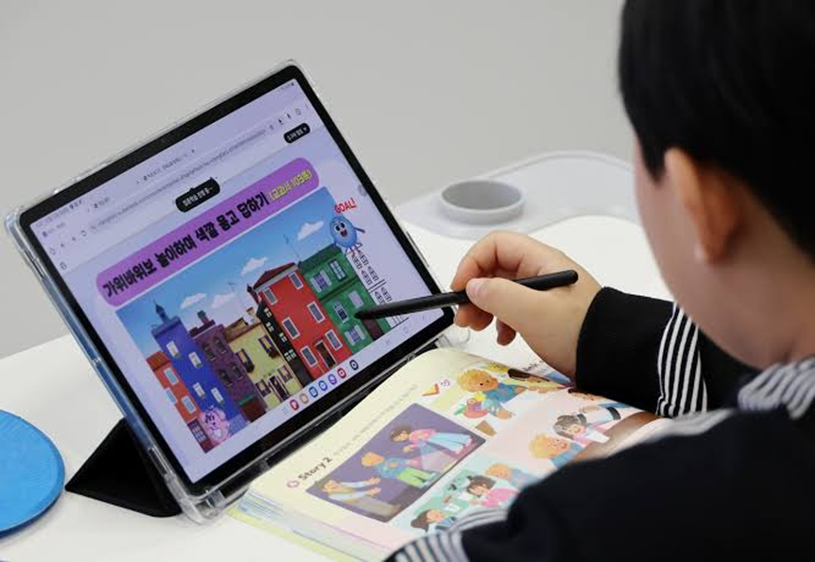
Picture credit : The Korea Herald
Opportunities Created for International Learners.
The digitalization of university education in South Korea has brought forth a number of significant opportunities for international students. First, it provides academic flexibility since it enables students to be in control of their learning and manage their time better. Recorded lectures and online resources help students to carry out the language study, research interest and part-time work together with coursework.
Secondly, digital learning environments help in reducing cultural and communication barriers. Online platforms are creating a more structured and predictable interaction in the academic sphere, which might be less daunting for students who are not familiar with Korean classroom cultures. Therefore, this is encouraging a more open learning environment.
Third, digitalization is equal access to academic resources for all. International students are offered identical materials, feedback, and learning opportunities as their local peers via
The same platforms. This practice is aligning the evaluation of the students’ performance to be fair and consistent across borders.
Lastly, the digital tools’ existence has made South Korea a more appealing destination for study. International learners nowadays pay more attention to a country’s digital readiness and academic support systems when making their choice for higher education. The advanced digital education system in South Korea has a positive effect on its global competitiveness.
Challenges and Limitations
Even though digitalization has a lot of benefits but it also creates some problems. Long-term e-learning can cause digital exhaustion that can lower student engagement and motivation. Complete online courses may not provide as many chances for students to meet and talk with each other in person as it is very crucial for language learning and socializing.
Moreover, during the time of online classes, the access to good-quality instruments and strong internet connections is different among students. Language difficulties may still exist in online discussions where quick talks are required.
Therefore, the above difficulties underscore the necessity of having a blended method that uses both technological advancements and traditional academic interactions.
Conclusion
The digital transition of university education in South Korea has completely changed the academic life of international and local learners alike. By utilizing top-of-the-line digital infrastructure, applying hybrid learning models, developing language-friendly resources, and implementing effective administrative processes, colleges and universities in Korea have built an educational environment that is both supportive and flexible. These changes made the whole thing easier for the international students by cutting down the structural barriers, providing more academic engagement, and finally introducing them more easily to the foreign education system.
The South Korean persistent digital education investment amid the global race for international students will make it a visionary and an inclusive study place. As a result, the digitalization process presents some challenges, but the opportunities it creates far outweigh its limitations. If the current trend of innovation and student-centered approach
Continues, then digital education will surely be one of the key factors when it comes to the future of international higher education in South Korea.
Share it with your family and friends:
Read more on our website:
Nice88Bet, I’ve found it pretty reliable. They have a good range of sports and other things to bet on plus fast payouts are always a plus!nice88bet
BetplayBingo, Bingo is your thing this is a good place to play. They’ve got different bingo rooms running all the time. The chat is always hopping too!betplaybingo
20Bets, a decent betting platform. I like how easy it is to find different sports & odds. The site is pretty straightforward.20bets