
Writer: Areeba Shafeeq
Editor: Arpita Jena
Introduction
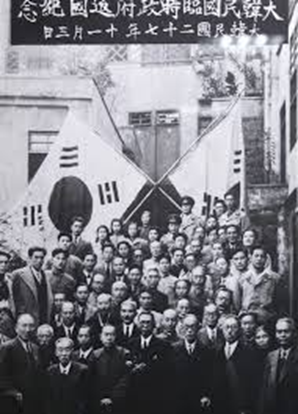
Today, when people talk about South Korea, they often highlight its advanced technology, automobiles, K-pop entertainment industry, artificial intelligence, and global brands. However, what usually gets left behind is how fragile the country once used to be. In 1945, when South Korea finally gained freedom from Japanese rule, it did not gain independence with confidence or comfort. Instead, it stepped into uncertainty. At that point, the country was poor, divided, and soon after, torn apart again by war. Moreover, there were no natural resources to rely on, no powerful industries, and no clear global identity.

Picture Credit: WIKIPEDIA
Under these circumstances, no one would have guessed that this same country would one day become a global center for technology, automobiles, and artificial intelligence. Yet, that is exactly what happened not because of luck, but rather because of a series of deliberate choices. Over time, South Korea treated development as something to be built, not something to be passively hoped for. This approach, in turn, is described as 국가 전략 (gukga jeollyak – national strategy): the idea that a nation moves forward only when its government, businesses, and people move together.
Picture Credit: KOREA.NET
Starting with People, Not Power
In the early years after independence, South Korea had almost nothing. But it made one decision that shaped everything else it chose to invest in their people. Education was not seen as a personal advantage, it was seen as a national duty. This belief represents 교육 (gyoyuk – education) as the heart of progress.


Picture Credit: THE KOREA HERALD
Even when money was scarce, the government and communities built schools, expanded literacy programs, and encouraged discipline across society. Parents firmly believed that education offered the only path forward, and students carried this pressure with quiet determination. South Korea clearly understood one crucial truth: while it could build factories and import machines later, developing skills, mindset, and resilience required time, commitment, and unity.
Learning to Build, Then Learning to Compete
By the 1960s, South Korea was ready to take its next step. Instead of growing slowly and eventually, it took a different step. The government chose an export led path and specifically worked closely with a few selected companies, helping them stay, survive, grow, and eventually step ahead globally. This led towards the rise of 재벌 (chaebol – large family-controlled business groups) like Samsung, Hyundai, LG, and SK.
Picture Credit: THE GLOBAL TANDAV
These companies did not start strong. Many consumers dismissed early Korean products as cheap or unreliable. But improvement never stopped. Steel plants, shipyards, electronics factories, and automobile lines were built step by step. This phase reflects the famous Korean mindset of 빨리빨리 (ppalli-ppalli – fast-paced culture) but not really at a reckless speed. It was speed guided by purpose and mission.
What really stands out here is patience and consistency. Korea never took the shortcut. Every step prepared the ground for the next.
South Korea’s Quiet, Steady Progress
| Phase | What Korea Focused On | What Changed |
| 1945–1960 | Education & recovery | A skilled population |
| 1960–1980 | Industrial exports | Strong domestic firms |
| 1980–2000 | Global markets | International trust |
| 2000–2020 | Digital economy | Tech leadership |
| 2020–Present | AI & innovation | Future readiness |
Source : Areeba Shafeeq: Own analysis
When “Made in Korea” Began to Mean Something
In the 1990s, however, something important changed. South Korea realized that success was not only about producing more and more; instead, it was about being trusted by customers. As a result, companies began investing heavily in research, design, and branding. Gradually, companies refined their products. At the same time, they carefully studied mistakes and repeatedly made improvements.
Over time, “Made in Korea” began to change its meaning. This transformation, in fact, reflects 신뢰 (sin-roe – trust). Rather than chasing quick wins, Korean companies shifted their focus toward building long-term reputation. Meanwhile, Korea also started investing early and strategically in digital infrastructure. Because of this, high-speed internet and mobile connectivity became part of daily life, accessible to almost everyone, thereby enabling businesses to innovate faster than many global competitors.
Technology and Automobiles
Today, South Korea does not need to announce its success out loudly, it shows through its results. Samsung leads global semiconductor markets. Hyundai and Kia are no longer just car companies, they are shaping the future of electric vehicles, hydrogen energy, and smart mobility. And almost ruling Globally.
This level of excellence reflects 정밀성 (jeongmilseong – precision and attention to detail). Korean companies consistently refine, test, and improve their products. They treat their headquarters not merely as offices, but as spaces where engineering, design, and long-term thinking actively come together.
Artificial Intelligence: The Next futuristic approach
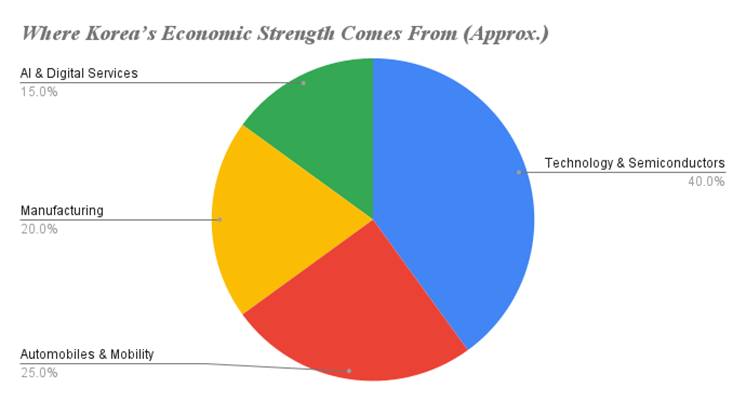
In the recent years, artificial intelligence has become Korea’s next big focus. But once again, the initiative is careful. AI is similar as 국가 기반 기술 (gukga gibang gisul — national foundational technology), which the country must build responsibly and use wisely.
AI is now part of daily existence:
- Smart factories
- Autonomous vehicles
- Personalized marketing
- Healthcare diagnostics
- Financial security
Source : Areeba Shafeeq: Own analysis
What actually highlights in Korea’s approach is 사람 중심 (saram jungshim – people centered thinking). The usage of AI is not as a replacement for humans, but as a partner that works alongside them. Organizations actively prioritize training, reskilling, and human–AI cooperation, treating them as necessities rather than afterthoughts.
Why This Journey even Matters?
South Korea’s story matters because it shows that development is not about copying others or moving the fastest; rather, it is about staying consistent. From the very beginning, South Korea invested in education even before the results were visible, because it clearly understood the long-term value of learning. Moreover, it trusted long-term strategies even when shortcuts seemed tempting and easier to follow. It allowed businesses to fail, learn, and try again.
Conclusion: Development Is Built, Not Given
South Korea did not escape history; it carried it forward. The country moved from colonization to confidence and from survival to leadership, earning every step along the way. Therefore, South Korea’s rise proves one powerful idea: when people, policy, and technology grow together, they create sustainable transformation. As a result, even seemingly impossible goals become achievable.
Korea’s success is not a miracle. It is a reminder for everyone that with patience, discipline, and belief in people, even the unkindest beginnings can lead to global influence.
Share it with your family and friends:
Read more on our website:
Jilibet’s bonuses are the real deal! Been playing here for a while, and they always have something going on. Keeps things interesting. Level up your gameplay: jilibet bonus
Looking for the Plot777 app. Easier to play on the go! Let’s see if this site can point me in the right direction. Check out plot777 app
Word to the wise, slotplus knows what their doing with the bonuses and games. I’d say check them out for a good experience. Here’s the link to slotplus