
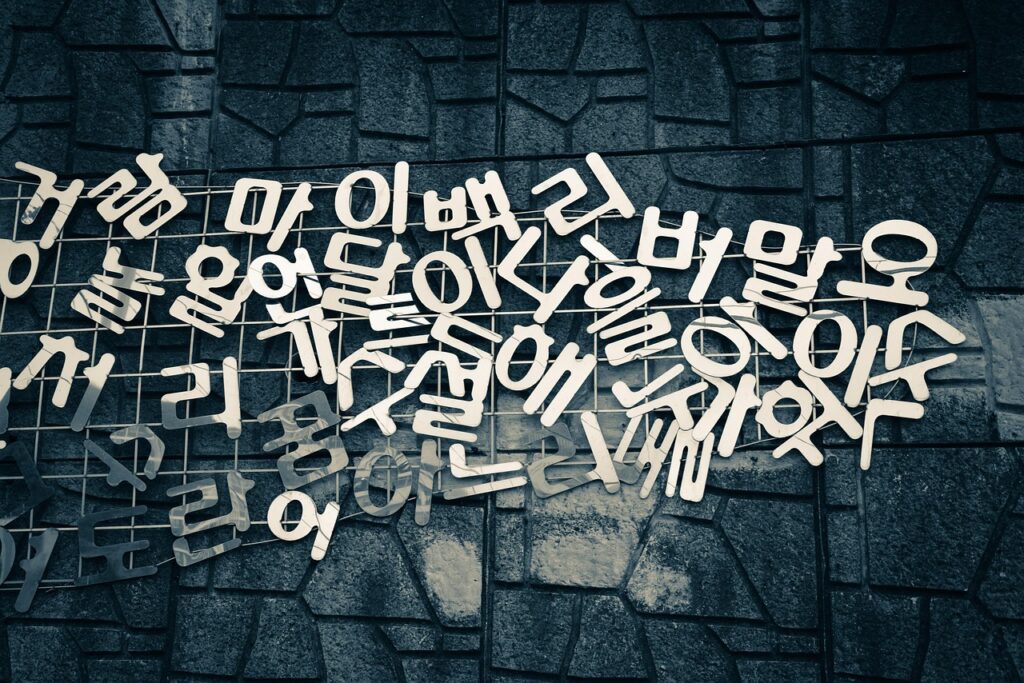
WRITER : HARDESH NARANG
EDITOR : SHIVRAJ PATEL
Every language is like a puzzle where you have to put pieces together to form words and then further use those words to form sentences which are later use in communication. These pieces are called alphabets which are building blocks of each language. Hangeul is the puzzle pieces for Korean script. Today we are going to talk about Hangeul, its history, its traditional importance and its influence on Korean learners. So, let’s get straight into it.
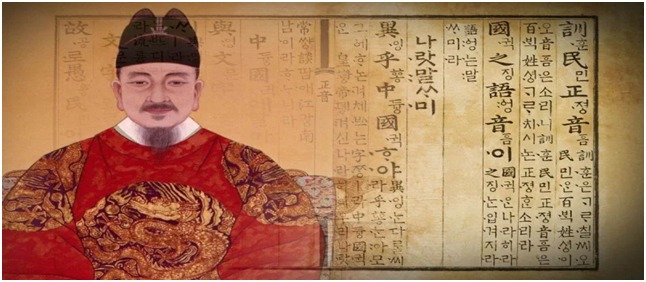
Picture Credit : Kootneeti
The origin of Hangeul can be traced back in the time during the reign of King Sejong the great, he was the fourth monarch of the Joseon dynasty, who ruled over Korea for almost 32 years starting from 1418 till he died in 1450. He is given the major credit for creating Korean Hangeul which brought literacy and communication revolution in Korea. Earlier Korean people used Chinese alphabet script ‘Hanga’ but it was only used by elite class of Korea. King Sejong thought about the common people who was still illiterate. He also observed that Japanese simplified the Chinese characters by turning them according to their need along with the Chinese characters. Thus, he sought to create a writing system which was easier to learn and accessible to all. King set his greatest scholars of that time to work to create such a script. Thus, hangeul came to existence in 1443. Making it the only language with the fully documented origin as we know exactly when, how and why it was made.
When first introduced, Hangeul faced resistance from the upper class, who preferred the prestige of Hanja. However, it gradually gained acceptance among the common people, who used it in letters, songs, and poems, giving voice to emotions and stories that had previously gone unnoticed. Its role became more prominent in korea during the time of hardships. During the Japanese colonial rule over korea (1910-1945) the use of Hangeul was discouraged and was strictly banned in public life, as part of efforts to suppress Korean identity. Yet, Koreans secretly preserved the script through cultural works, underground newspapers and handwritten notes, all in order to keep their heritage alive.
Thus, every year on 9th October, South Koreans celebrate Korean alphabet day. The celebration of Hangeul Day each year is not just about honoring a script—it is about remembering the struggle for identity, celebrating the gift of knowledge, and affirming national pride. In this way, Hangeul stands as both a practical tool for communication and a timeless symbol of Korean culture and spirit
Hangeul follows a phonetic script system, meaning that each letter represents a different sound. Hangeul has 14 basic consonants each of which depicts the different shape of the mouth, tongue or throat, when making the respective sound and it has 10 basic vowels which are inspired by the principles of yin and yang and elements of nature such as: heaven (a dot), earth (a horizontal line), and human (a vertical line) for forming a word, Consonants and vowels are grouped into syllabic blocks, making reading visually clear and structurally balanced. Due to this logical approach, it is often referred as “the most scientific writing system.”
In recent decades, the world has seen an rise in the number of people learning Korean. While the Korean Wave (Hallyu)—with K-pop, K-dramas and films—plays a major role, Hangeul itself is a significant factor in drawing learners. The major reasons are given below:
First, Hangeul’s accessibility lowers the barrier to entry. Hangeul is often described as learnable “in a morning,” thanks to its phonetic nature and simple rules. Beginners can quickly read song lyrics, drama subtitles, or social media posts, giving them an immediate sense of achievement and motivation to continue learning Korean.
Second, Hangeul’s aesthetic appeal cannot be overlooked. Its symmetrical blocks and clean lines are visually pleasing, making it popular in fashion, tattoos, and graphic design. International fans often start learning the script just because they find it beautiful, and in the process, they get to know the language and culture.
Third, Hangeul offers cultural immersion. For fans of Korean entertainment, learning to read Hangeul opens the door to understanding original dialogue, wordplay, and cultural taste that translations often miss. This deepens their connection with Korean media and motivates them to explore more of the language.
At last, I would sum up my words by telling you that Hangeul is more than an alphabetic system—it is a bridge between language and identity, past and present, Korea and the world. Every curve and line in its characters carries centuries of history, creativity, and pride, ensuring that it will remain not just a means of communication, but a cherished emblem of cultural heritage for generations to come.
Share it with your Family & Friends
Heard some buzz about win777casino, so I had to check it out. Massive selection of games! Could get lost in there for hours. See if you like it win777casino
If you’re looking to make some extra cash, the win777affiliate program might be worth a peek. Seems pretty straightforward and the potential earnings look good. I would check it out win777affiliate
Just signed up for 123betno1, and the sign-up bonus is pretty sweet! They seem to have a nice mix of games and sports bets. What are you waiting for? More information available here 123betno1