WRITER: ARPITA SINGH
EDITOR : SHIVRAJ PATEL
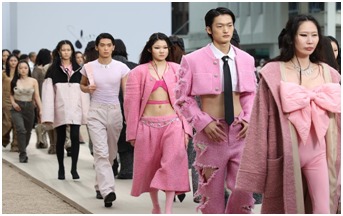
Picture Credit: Seoul Fashion week 2022
In the last twenty years, South Korea has radically changed its fashion industry from a soft, domestic affair to one that influences closets internationally. Streetwear and traditional dress once considered modest have been transformed into the recognizable, eye-catching identity. In a similar way to the Hallyu waves of TV and music, Korean fashion has gone far, mixing culture, innovation, and tradition and establishing itself in the middle of international style discourse.
Remembering: The Past of Korean Fashion
Prior to the early 2000s, Korean fashion was more domestically oriented. Western styles inspired most of the clothing trends, with little Korean cultural identity evident. People wore what was modest and utilitarian, and fashion wasn’t considered an international commodity at that time. The hanbok, which is Korea’s traditional costume, was only reserved for festivals, weddings, and ceremonial occasions as opposed to daily use.
In the late 20th century, Korea was recovering from decades of war and economic difficulty, so there were few and far between luxury international brands and even they were largely unaffordable to the general population. Fashion on the streets was basic, and the prospect of Korea as a trendsetter in fashion seemed remote to many.
But something began to shift sometime around the early 2000s, at the same time as the growing strength of Korean popular culture. When K-pop and K-dramas started to spread beyond national borders, they brought a spark of modern Korean stylishness-younger, more avant-garde, and most definitely not-Western-mainstream.
The Turning Point: Pop Culture as a Fashion Vehicle
The reality check for Korean fashion was the international boom of K-pop. Idols were not merely singers-they were fashion icons. Fans did not only wish to hear their songs; they wished to dress like them. Fashion brands realized this in no time and began endorsing Korean celebrities.
K-dramas served a comparable purpose. A character’s outfit could sell out in hours after appearing on screen. “Winter Sonata” coat style of the early 2000s or the “Crash Landing on You” high-end ensemble in more recent times proved how influential Korean media had grown in dictating world fashion decisions.
This was also when unique Korean street fashion was conceived. Hongdae and Gangnam neighborhoods in Seoul were the center of outgoing fashion styles: oversized trench coats, pastel hues, layered outfits, and bold accessories. These were not just fashion statements; these were a testament to the confident and new Korea.
What’s Changed: The Emergence of K-Style Identity
Perhaps the most significant evolution in Korean fashion has been away from mimicking trends and towards becoming drivers of them. No longer did Korea copy Western fashion, but instead created its own style identity: tense silhouettes, vibrant color contrast, minimalism infused with fun details, and comfort versus elegance.
Social media sped up this shift. Instagram, TikTok, and YouTube provided Korean style influencers and stylists with a way of presenting their looks to the world in real time. Overnight, a Seoul Fashion Week street style photograph could influence a person in London or Jakarta the following day.
How Korea is Leading the Fashion World Today
Korean fashion leads the world discussion today. Seoul Fashion Week is featured in major international publications, and Korean fashion designers are now working with such companies as Louis Vuitton, Dior, and Nike.
And another revolution has been the merging of luxury fashion and streetwear. Korean designers like Lie Sang Bong, Juun.J, and Minju Kim brought fresh concepts onto global runways, and brands like Gentle Monster (sunglasses) and Ader Error became cult labels globally.
Sustainability is also increasingly entering the Korean fashion discourse. Younger designers are turning to upcycling, sustainable materials, and slower fashion cycles demonstrating that Korea is not only about trends, but about creating the future of conscious style.
Why Korean Fashion Stands Out
– Attention to detail: Outfits often balance boldness with subtle elegance.
– Synthesis of tradition and modernity: Antique features like hanbok-inspired silhouettes or motifs are reinterpreted in current use.
– Media influence: Fashion is directly related to the K-pop and K-drama industries, and thus style is an element of narrative.
– Accessibility: From high-end to affordable street style, there is something in Korean fashion for everyone.
The Future of the Korean Fashion Wave If the last twenty years are any guide, Korean fashion influence will only intensify. As global domination of Korean entertainment shows no signs of slowing down, its fashion will follow naturally. More and more brands are establishing international shipping, having pop-ups in cities around the world, and even creating items specifically for international markets. What started as a local fashion change has grown into an international phenomenon. The Korean Fashion Wave isn’t simply about apparel, it’s about identity, imagination, and the way that culture has the ability to bring people together everywhere. And as long as Korea continues to mix innovation with heritage, it will be a fashion trendsetter for many years to come.
Share it with your Family & Friends :