
WRITER : AREEBA SHAFEEQ
EDITOR : SHIVRAJ PATEL
Indo-Korea: Bonds sewed Through History and culture
The ties between India and Korea go far beyond modern diplomacy. They are carved into legends, faith, struggles, and sacrifices that have bound the two nations across time. Some destinies were tied years ago.
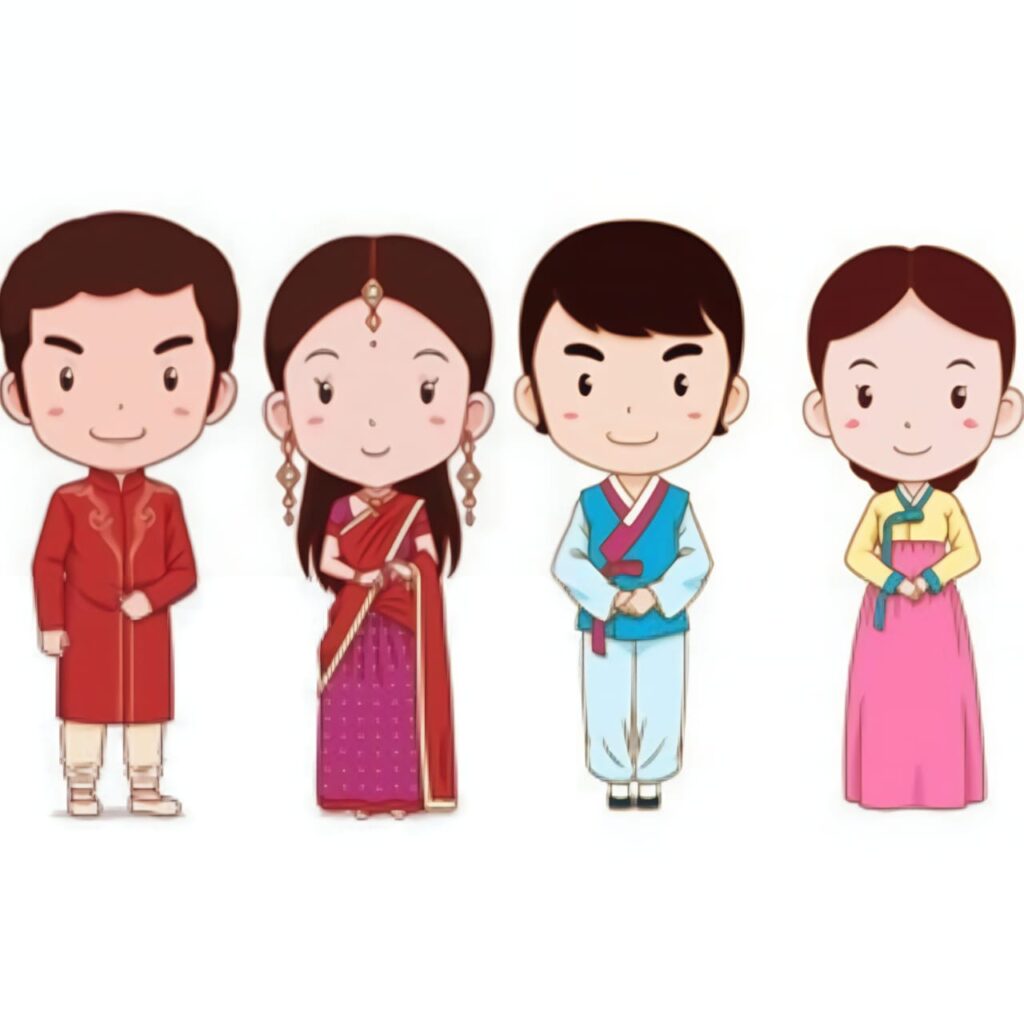
Picture Credit : Pinterest
“From Ayodhya to Gaya — love became our first diplomacy.”
One of the earliest bridges formed between India and Korea lies deeply hidden in the story of Princess Suriratna also known as Princess Heo Hwang-ok.
Long long ago, In the 1st century CE a princess from Ayodhya sailed across the seas to marry King Kim Suro, the Founder of Gaya Kingdom. Their descendants, carrying the surnames Kim and Heo, form a significant part of the Korean population today. Almost 21% of the population holds Kim as their surname making it the most used surname in Korea.
This is more than a romantic legend: it is an origin story of diplomacy. In Ayodhya, India has built a memorial to the Queen on the banks of Saryu River known as ‘Rani Ho Park’ memorial and thousands of Koreans visit every year to honour their ancestral home. This tale demonstrates how we have built connections years and years ago making it the oldest bridge between India and Korea.
“The Bodhi tree in India spread its branches to Korea.”
The spread of Buddhism in the 4th century CE marked another historical connection between Korea and India. Born in India under the Bodhi tree at Gaya, Buddhism travelled along the Silk Road reaching Korea through China. Once adopted by the kingdoms of Goguryeo, Baekje, and Sill: it shaped Korean philosophy, architecture, and governance till this date.
Korean monks made pilgrimages to India, they studied at great learning centers like Nalanda. They returned with scriptures, relics, and wisdom that transformed Korean spirituality. Even today, Korean pilgrims bow at Bodh Gaya seeing it as a spiritual homeland.
“15th August — 두나라, 하나의자유 (Two nations, one freedom).”
Centuries later, both nations endured colonization over them: India under Britain, Korea under Japan. Their struggles mirrored each other’s pain, sacrifices, suppression of language, culture, and resources, yet they held an unyielding thirst for freedom.
“A dawn of freedom was their dream for years”
India rose with Mahatma Gandhi’s nonviolence and revolutionaries who refused to bow down in front of the Britishers, while Korea answered with the March 1st Movement (1919) and underground resistance. Both carried the belief that freedom was everyone’s birthright.
What makes these parallel worlds of fighting for freedom extraordinary is the coincidence of their independence date, 15th August is sacred for both. For Korea, Gwangbokjeol (광복절, “Restoration of Light”) also known as Liberation Day in 1945 ended Japanese rule. For India, Swatantrata Diwas also known as Independence Day in 1947 ended British rule. Two years apart, but the same date, 15th August became the shared sunrise of independence among both the countries who once dreamt of witnessing the dawn of freedom: finally succeeded.
“In war, India sent healing: in peace, it offered friendship.”
The Korean War (1950–1953) was one of the greatest tragedies of modern Korea, leaving the peninsula divided. In this crisis, India played a remarkable role in peace keeping. Indian medical teams treated the wounded of Korea, while Indian diplomats chaired commissions to arrange prisoner of war exchanges.
At a time when global powers were divided, India stood as a supporter of peace and humanity. This gesture reinforced India’s identity as a friend in need, offering care instead of conflict.
“And both the countries made another remarkable connection of history”
Conclusion: “India and Korea: where history meets harmony.”
From the marriage of Princess Suriratna to the spread of Buddhism, from the shared fight for independence to India’s role as a healer in the Korean War, the ties between India and Korea run deep in history. These are not just moments of the past but living bonds that continue to inspire both nations.
Today, when Indians and Koreans greet each other with “(Namaste)” and “안녕하세요 (Anneyonghaseyo)” they are not just exchanging words of greetings, they are carrying ahead centuries of respect, resilience, and shared destiny.
Share it with your Family & Friends :