
WRITER : PRACHI SHARMA
EDITOR : SHIVRAJ PATEL
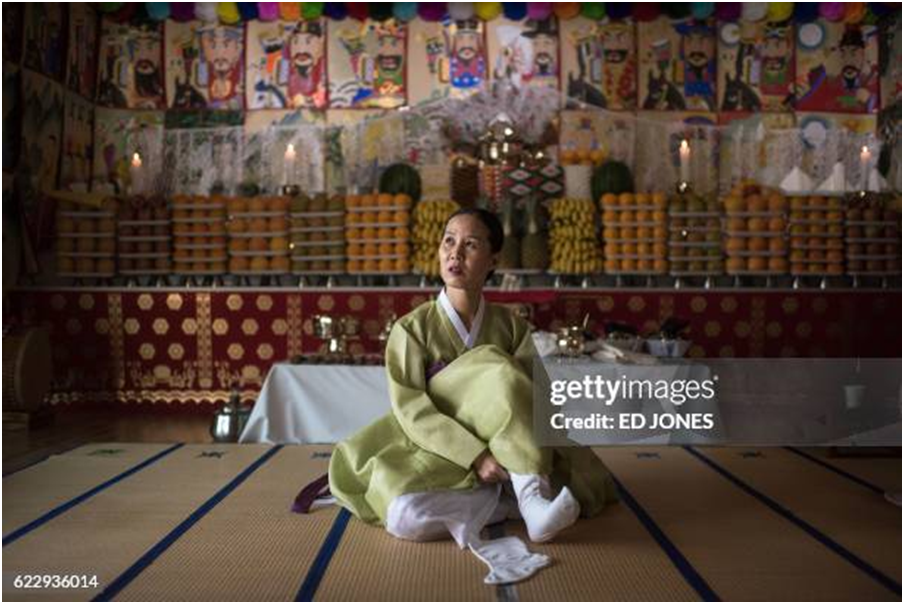
Nowadays we know South Korea for K-pop, colourful dramas and modern technology. But behind this glittering world, there is another face – full of mysterious stories, spirits and old customs. One of these is the Gwisin Ritual (귀신 제사), which is performed to calm the spirits who could not find peace even after death.
Picture Credit- Getty images
Who are Gwisin?
According to Korean beliefs, Gwisin are the spirits of those who have died an abnormal, painful or incomplete death. Those who did not receive the proper rites or whose last wishes were not fulfilled are the spirits which keeps wandering on the earth.
Gwishin is said to have a frightening appearance dressed in a white shroud, with long open hair, a pale face, and eyes filled with anger or sadness. They are often seen in abandoned houses, old schools, and forests. In villages, it was believed that if Gwishin was not appeased, illness, bad luck, or misfortune would befall the family.
Ritual: Communicating with the spirit
When a household or village felt that a Gwishin was wandering around, they would call in a Korean shaman called Mudang (무당). These women or men would communicate with spirits and guide them to the afterlife.
This nighttime ritual is called Gut (굿). It consists of several steps:
Food offerings: Rice, fruit, wine, and sometimes raw meat were offered to the spirit.
Chanting and singing: Mudang would sing specific songs and chants to summon the spirit.
Dancing and trance: Often the mudang would suddenly fall into a trance while performing a rhythmic dance, and then claim that the spirit was speaking through their own tongue.
Bargaining: If the spirit was angry, the Mudang would promise that its wishes would be fulfilled. Only then would the spirit go to the other world in peace.
During this time, the family or villagers remain completely silent. Even a pin drop sound can anger the Gwishin, and people believed that the spirit would then follow the person. It was terrifying to think that you are sitting in a room and there is an invisible person standing in front of you.
From tradition to horror stories
Nowadays Korea is completely modern, but the stories of Gwishin are still alive. Real Gut rituals are sometimes performed in villages, but in cities it has become an urban legend.
Korean students test their courage by going to abandoned schools at midnight. Just like we hear the game of “Bloody Mary” here, similarly there, the children call out names in the mirror or knock on the closed classroom door. Some laugh it off thinking it to be a joke, but many say that they saw strange shadows walking or heard the sound of someone’s footsteps.
Why do Gwishin still scare people?
The belief of Gwishin is not just a story of fear, it also reflects the thinking of Korea in which respect for the dead is very important. It is believed that if the spirits are not taken care of properly, they can become a problem for both the family and the society.
Even today Korean horror films and dramas revolve around Gwishin. Films like “Whispering Corridors” or the horror specials on TV in the summer are proof of the fact that stories of spirits still captivate people. Even in the haunted houses of amusement parks, the same Gwishin dressed in white, with hair covering their faces, can be seen.
A Final Word
The Gwishin ritual teaches us that death is not the end of everything. Unfinished stories, unfinished wishes, and unfinished rituals can bind a person even after death. This is why people in Korea still respect spirits and not ignore them.
And perhaps that is why when we think of the woman in white, with long hair covering her face and standing silently in the darkness our hearts beat a little faster.
Share it with your family & family :