
WRITER: ARPITA SINGH
EDITOR: NANDINI
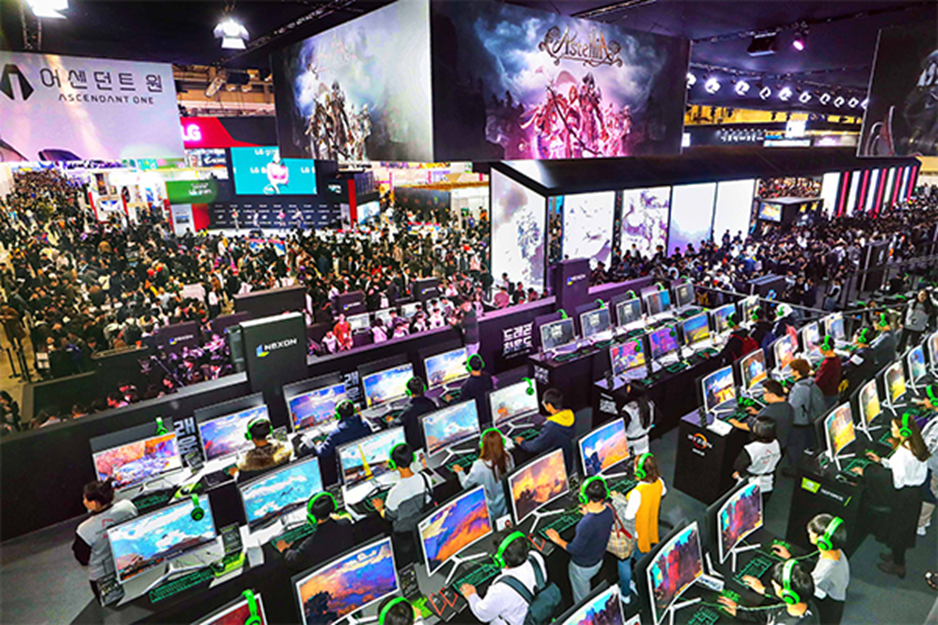
IMAGE CREDIT: PULSE BY MAEIL BUSINESS
Late night wandering of Seoul’s city streets will find them. The blue light of so many PC bangs, or internet cafes, spilling onto the sidewalk. Inside are clusters of friends jammed together, their faces bathed in the glow of screens, headsets full of the boom of guns and screaming of epic battles. It is not so much of a hobby; it’s a part of South Korean life these days. The gaming culture here transcends technology and money. It is a culture of unity, suspense, ambition, and timing.
For some, like my friends, gaming is a social experience. The PC bang is home after days at work or in school. It’s where they gather to unwind, to laugh, and to battle together in virtual environments. Games such as League of Legends and Overwatch are not simply games; they are the setting for friendship. I’ve seen groups of office workers, still in their suits, commanding champions with the same intensity they use in board meetings. It’s a freedom, a means of dropping the proprieties of too-stuffy society and just *play* together. This culture
brought gaming into the mainstream, something everyone does, from university students to older people. No longer was it a niche pastime but more like a lingua franca.
But this passion for gaming has another, much healthier aspect: the world of esports. Korean pros are not just wonderful players; they’re stars, treated with the same regard as K-pop stars. I distinctly remember watching a large StarCraft final on television several years ago. The arena was packed to capacity, a cacophonous ocean of light sticks waving in the air. The competitors were booths with soundproof panels, teenager-turned-gladiator. Commentators were screaming, individuals were going crazy. That’s when it hit home—this wasn’t a game. This was a national pastime.
To be a professional gamer here is a career predicated on sheer discipline. Such gamers, typically spotted when they’re young, live in team houses where their life is literally strapped by timetable: practice regularly, strategy session, gym practice, and practice again. It is a tough task. For each such super star who makes it to the arena, there are hundreds that burn themselves out in the process. We celebrate their victories, but we see also the pressure. They carry their fans and teams on their shoulders, young shoulders, at that, and their careers can be fragmentingly short-lived. It’s a life of blinding loveliness, but one which gives nothing back.
And the artists. Korean companies like Nexon and NCsoft did not merely design games; they built worlds which millions existed in. I used to have a cousin who played a lot during her childhood in the world of MapleStory. It was a world of fantasy to her, a land of cuteness and constant questing. Later on, when we grew up, games like Lineage and Aion offered gigantic, pretty worlds to discover with friends. More interactive, more *colorful*, than anything we’d ever encountered. They compelled the world to realize that Korea was not just a player, that it was a behemoth that could produce world phenomena.
Yes, along with the heavy use of gaming in everyday life comes some rather dire conversation. The term “gaming addiction” is taken very seriously here. You read and hear about it in the news, and parents worry about their children spending too much time staring at a screen. The government has tried various things over the years, from the now-defunct “Shutdown Law,” which tried to limit children’s evening gaming. It’s a delicate balance—to acknowledge the entertainment and economic clout of the games, yet understand that they can be a poison for the weak. It’s an argument in every home it appears during dinner time.
In the future, the industry is changing once more. The mobile games universe is vast. Nowadays, everybody has a very powerful console in his or her pocket. You see people playing Lineage M or puzzle games on the way to work. Also, Korean game makers no longer keep up with trends but set them. The grass-roots success of a game such as PUBG gave the thrill of the battle royale genre to the world, something that now has taken over the gaming landscape.
Attempt to visualize Korea’s gaming landscape, then, and don’t attempt to visualize code and consoles. Attempt to envision the high school friends relaxing after tests. Sense the electric atmosphere in an esports arena. Understand the vision of a creator constructing a new world. And listen to anxious parents speaking to their child. It’s all of those, blended together. Gaming in Korea is a reflection of our modern world—our desire to connect, our urge to compete, our urge for escape, and our never-hungry hunger for play. It’s simply more than simple games.
Share it with your family and friends:
Millonixvip… hmm, I’m feeling a little fancy today. Gave it a whirl, and yeah, it’s got that VIP vibe. Rewards system seems solid, and the games are pretty slick. If you’re feeling lucky and want a little extra pampering, try millonixvip.
Game365ok, sounds promising! Covering all the bases, huh? Hoping for a solid and dependable experience. Time to test it out! Give it a go at game365ok
365okgame? Sounds like they’re aiming for year-round fun! Hope it lives up to the hype. Fingers crossed for some good times! Check out 365okgame