
WRITER : AREEBA SHAFEEQ
EDITOR : RITIN
Picture Credit : Pinterest
If today you walk in the streets of Seoul, the signs, books, menus, flyers, posters and even government documents are mostly or entirely written in Hangul, Korea’s beautiful and simple alphabet, but not too long ago life looked very different in South Korea. For long decades everyday writing in Korea relied on Hanja – the Chinese characters that were once adopted in Korea, but today Hanja feels almost like a ghost from the past, showing rarely, only in old text, calligraphy, manuscripts or traditional newspapers. So why? And exactly what could have been the reason behind why South Korea let go of something that once defined their written culture, where hanja played a very crucial role? But today, why did it disappear?
From Hanja to Hangul: Different worlds of writing
Hanja first arrived in Korea more than a thousand years ago, and for a long time it was the only way to write and communicate. Kings, monarchs, scholars and officials used it for records and literature, but it was extremely difficult to require thousands of characters to be memorised. Ordinary farmers, merchants and women had almost no idea of becoming literate because of so many characters.
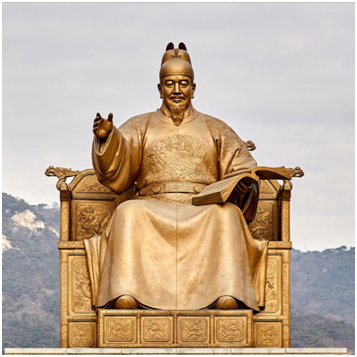
Things changed in the 15th century, when King Sejong the Great gifted his people Hangul, an invention of an alphabet of just 24 letters, cleverly designed so that even commoners could learn to read and write and become literate. Hangul was revolutionary, but the elites resisted, calling it “too easy” and even “low class”, they only valued Hanja characters. For many centuries the two systems coexisted together: ‘Hanja’ for prestigious people and ‘Hangul’ for regular people.
Liberation and the existence of the question of true identity
The real change came in the 20th century, when Korea was under Japanese rule from 1910 to 1945. Koreans were forced to use Japanese, as it was made mandatory to use Japanese in schools and as the official language. By the time Liberation came in 1945 for Korean people, they were eager to reclaim something that was really truly Korean, and there began the journey of Hangul.
Hangul became more than just letters to Koreans, it became a symbol of freedom and identity. Dropping Hanja was not only about language, it was about saying that “This is who we are. We are not China, we are not Japan. We are Korea.”
Making people literate
There was another very practical reason for taking Hangul as their official characters. After Liberation and the Korean War, the country had to educate millions of people quickly. Hanja, with its thousands of complex characters, was a barrier for the people. While, on the other hand, Hangul could be learnt fast enough within a few days. And hence, children, farmers, women and workers who had never held a book could suddenly read newspapers, street signs and letters from their loved ones.
In the era of the 1960s and 70s, as South Korea rose towards industrialisation, mass literacy became essential. A workforce that could read and write in Hangul; this helped bring the ‘Miracle on the Han River’. It was efficient, modern and fair. Everyone had access to education regardless of their background.
Modernisation of Korea and politics
The political leaders also saw dropping Hanja as a part of modernisation. North Korea completely banned it, while South Korea took a softer step, removing it out from schools, newspapers and official documents. Slowly and eventually, Hanja disappeared from everyday view. Hangul became the face of modern and democratic Korea, free from the hierarchies of the past.
Does Hanja still matter in Korea today?
Despite the fact Hanja is no longer dominant in Korea, it hasn’t fully vanished either. Many Korean words came from hanja roots, which explains why there are so many homonyms. For example, “사과” can mean “apple” or “apology” at the same time; it has the same sound but different characters doing it. Knowing so Hanja clears up the confusion.
That is why some schools still teach it, and scholars use it to study history, literature or calligraphy, which not only connects Korea to its East Asian neighbours since both China and Japan still use these characters.
The bigger element
The story of hanja’s discontinuation is really the story of Korea’s transmission. By letting go of a writing system tied to elitism and foreign influence, South Korea embraced Hangul as a path for unity, equality and progress. As of now, everyone in South Korea can read and write in the developed script which might not been possible in the past dominated by Hanja.
Hanja still lingers like a quiet ancestor, respected, remembered and occasionally brought back when needed for culture. In the end, South Korea didn’t fully erase Hanja completely. It did simply give the spotlight and more value to Hangul, a script born in Korean soil and a script that carries the nation’s identity and pride.
Share it with your family & friends :