
WRITER : ARPITA SINGH
EDITOR : SHIVRAJ PATEL
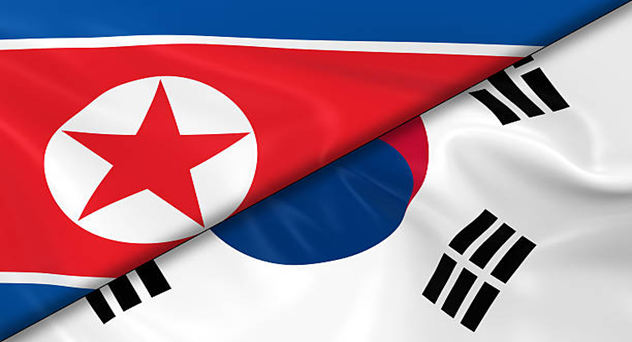
IMAGE CREDIT: GETTY IMAGES
Introduction
The partition of the Korean Peninsula into North Korea and South Korea is one of the most significant geopolitical legacies of the 20th century. Once a single state with one language, history, and culture, it was divided into two opposing systems: one communist and the other capitalist. This division, which began after World War II, has deeply influenced global politics and continues to shape the world today.
Historical Background
Korea was an independent nation with its own identity, bordered by China and Japan. However, everything changed in the early 20th century when Japan occupied Korea in 1910 and established a harsh colonial government that lasted until 1945. The Japanese suppressed Korean culture, exploited resources, and forced labor upon the people. Resistance movements arose, but Japan’s grip crushed Korea’s aspirations for freedom.
By the end of World War II, Japan’s defeat in 1945 provided an opportunity to restore Korea’s independence. However, rivalry between the United States and the Soviet Union complicated the process, planting the seeds of division.
The Division along the 38th Parallel
When Japan surrendered in August 1945, Soviet forces advanced into northern Korea, while U.S. forces entered from the south. The peninsula was arbitrarily divided along the 38th parallel by the Allied powers, with little regard for Korean unity.
Initially, the split was not meant to be permanent. The two superpowers had agreed to share responsibility for Korea’s liberation and later unite it as one independent state. However, as Cold War tensions escalated, the peninsula became a battleground of opposing ideologies—communism in the North and capitalism in the South.
By 1948, two governments emerged: Syngman Rhee, backed by the United States, established the Republic of Korea (ROK) in the South, while Kim Il-sung, supported by the Soviet Union, formed the Democratic People’s Republic of Korea (DPRK) in the North. Both claimed legitimacy over the entire peninsula.
The Korean War
In June 1950, North Korea, aided by the Soviet Union and later China, invaded the South, sparking the Korean War. The conflict claimed an estimated 3 million lives, including both civilians and soldiers. U.S. and United Nations troops supported South Korea, while Chinese troops reinforced the North.
The war ended in 1953 with an armistice rather than a peace treaty, leaving Korea divided along the 38th parallel. The heavily fortified Korean Demilitarized Zone (DMZ) became the world’s most militarized border, permanently separating families and communities.
Post-War Development
After the war, the two Koreas followed very different paths:
- North Korea pursued rapid industrialization under Soviet support and the authoritarian rule of Kim Il-sung. Its command economy and isolationist policies eventually led to economic stagnation, widespread poverty, and repression under the Juche (self-reliance) ideology.
- South Korea, with U.S. assistance, transitioned toward capitalism and democracy. The “Miracle on the Han River” transformed the country into one of the world’s leading economies, known today for its technological innovation, stable democracy, and global cultural exports such as K-pop and cinema.
Global Significance
The division of Korea became a symbol of the Cold War struggle between communism and capitalism. The Korean War was the first major military conflict of the Cold War, setting the stage for later proxy wars around the world.
Today, North Korea’s pursuit of nuclear weapons continues to raise global concerns, while South Korea remains a close U.S. ally and an increasingly influential global player.
Human Consequences
Beyond politics, the division caused immense human suffering. Families separated by the DMZ were rarely able to reunite, and limited reunions remain strictly controlled. The psychological trauma of displacement continues to affect generations.
Meanwhile, the stark contrast in living standards highlights the division’s impact: North Koreans face poverty and food shortages, while South Koreans enjoy prosperity, freedom, and opportunities worldwide.
The Question of Reunification
Most Koreans dream of reunification, but the obstacles are immense. Political, economic, and trust deficits between the two sides hinder progress. South Korea fears the economic burden of absorbing the impoverished North, while North Korea’s leadership resists any loss of power.
Still, shared culture, language, and blood ties keep hope alive. Occasional diplomacy and people-to-people exchanges offer glimpses of reconciliation, though the path remains uncertain.
Conclusion
The division of Korea is not merely a geographical separation but the product of foreign intervention, ideological rivalry, and decades of conflict. From Japanese colonization to the Cold War, Korea’s fate was shaped by global power struggles. Today, the prosperous South and isolated North stand as living reminders of this history.
Though reunification may not be imminent, the resilience of the Korean people and their shared heritage leave room for hope. The Korean Peninsula’s story is a lasting reminder of how political decisions can shape nations for generations and of the urgent need for peace in a divided world.
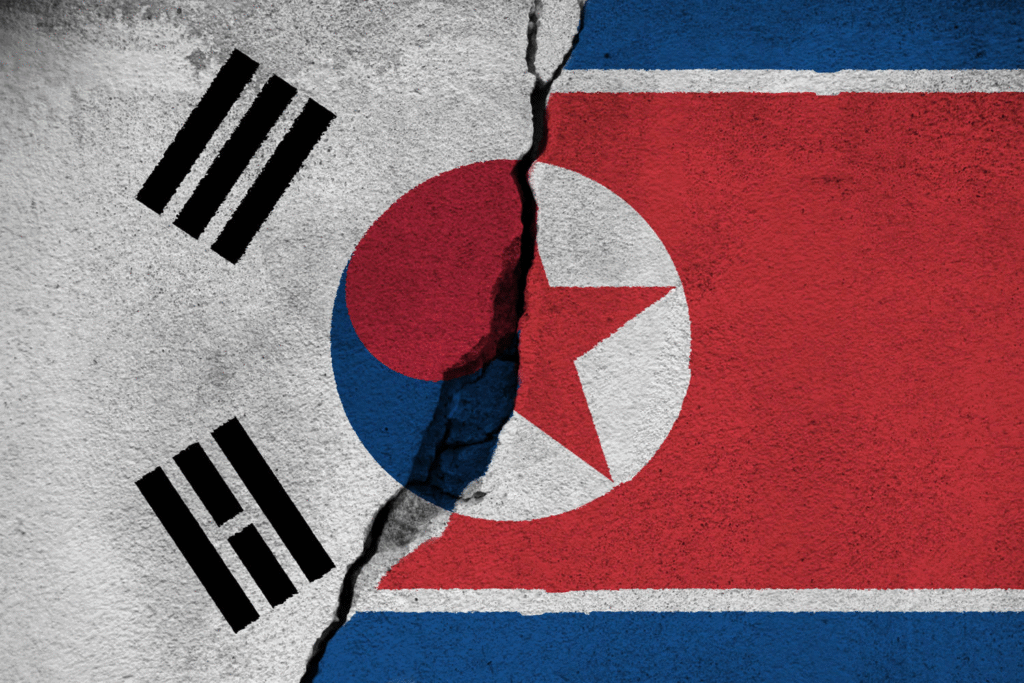
Picture Credit: PEACE RESEARCH INSTITUTE OSLO (PRIO)
Share this article with your family & friends: