
WRITER: ARPITA SINGH
EDITOR: NANDINI

IMAGE CREDIT: FUTURE LEARN
It was not sparked by a political decree or economic pact, but by a blockbuster song and an emotionally compelling television drama. The Korean Wave, or Hallyu, is a new cultural force that swept the globe, transforming South Korea from a nation renowned for its economic miracle to an outright soft-power superpower. A real, rather than fleeting fad, the popularity of Korean popular culture is a masterfully designed, industry-driven wave that has transformed global entertainment, fashion, and beauty production as a demonstration of worldwide popularity of good storytelling and catchy tunes.
The Hallyu past can be traced in waves. The first ripple was in the late 1990s and early 2000s, spearheaded by the global sale of television dramas like Winter Sonata to East and Southeast Asia. They were made with high quality, riddled with rich sentiments, and starred handsome boy idols, which captured hearts and bred a devoted fan base. That was succeeded by the firecracker-like, internet-facilitated second wave, when K-Pop became the unchallenged icon.
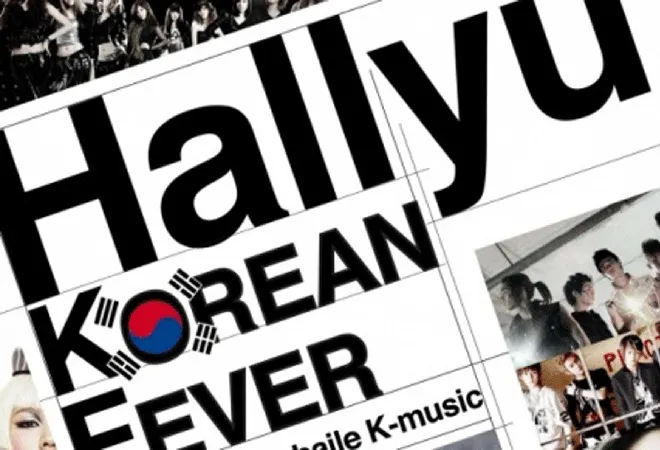
IMAGE CREDIT: OBSERVER RESEARCH FOUNDATION
The albums of artists like BTS and BLACKPINK did not just put out records; they created multimedia spectacles. Their impeccably choreographed music videos, congruent artistic visions, and deliberate use of social media portals like YouTube and Twitter set the new benchmark for global fandom. They were artists, of course, but icons too, fashion initiators, and the grin of a vibrant Korea.
This record-breaking feat is no accident. It is the product of a unique and highly disciplined atmosphere. At its heart are the entertainment companies such as SM, YG, and JYP operating as pop culture factories. They sign young trainees, typically children, and subject them to years of rigorous training in singing, dance, language, and media etiquette.
This model is working hard to ensure that the final product is good, but equally controversial in exerting so much pressure on young creatives. This is synergistically validated by the government of South Korea, which, in its early years, viewed culture as a major national export. Through initiatives like the Korea Creative Content Agency (KOCCA), the government has come to be more willing to sponsor cultural productions, subsidize world tours of overseas K-Pop concerts, and place Hallyu on diplomatic and tourism agendas, realizing the possibility that a BTS fan today may be a tourist, investor, or friend tomorrow.
Behind the world’s most bouncy choruses and coolest performances, much of the Hallyu attraction comes with its global and often aspirational taste. K-Dramas, to take one instance, talk about universal themes of love, family, ambition, and status but with a distinct Korean twist. They are always one-season standalone stories, with the traditional understanding of narrative arc in a time of eternally serialized Western soap operas.
Furthermore, they are also a platform for subtle social commentary, talking about such issues as income inequality, stress on the education system, and gender, among others, which ring in perfect harmony with global audiences who share the same concerns.
Consequently, global fashion and beauty industries have also been touched tremendously by the Korean Wave. The widely acclaimed 10-step skincare system propagated globally, advocating a gospel of prevention, self-pampering, and achieving “glass skin.”
Korean beauty standards, with their natural, dewy, youthful appearance, overtook Western-inspired practices and gave birth to a multi-billion dollar market for Korean beauty titans. In fashion, the gender-bending, style-seeking, eclectic fashion of K-Pop celebrities has been the benchmark for a whole generation, from street fashion to high fashion.
But beneath the shiny exterior of Hallyu are its own issues. The same apparatus that gives birth to its idols is faulted for oppressive pressure, manipulation of artists’ lives, and short-lived careers. The “dark side of K-Pop” is one of the shared themes, where mental illness and the human cost of perpetuated perfection are cited.
Also, as the Wave internationalizes, it will be subjected to tests of cultural saturation and the need for real evolution. Is it able to get beyond its tried-and-true formulas? There is also the constant test of being appealing globally while holding on to true Korean identity, untouched by cultural watering down and constant innovation.
The Korean Wave is more than merely a music or television phenomenon; it is a 21st-century lesson in cultural diplomacy. It reminds us that in this globalized world of ours, power is no longer exerted through economic or military might, but by the power of being able to seize the imagination of the world.
From a nation recovering from the ashes of war, Korea has employed its pop culture to mend divisions, redefine its global identity, and form a deep, emotional connection with millions worldwide. The Wave has arrived and is still taking shape, promising to continue reshaping the world’s cultural beach for the decades ahead.
Share it with your family and friends: