
Writer: Isha Chaudhary
Editor: Arpita Jena
The March 1st Independence Movement: How Korea’s Voice Challenged an Empire
History often remembers wars, treaties, and rulers. Yet some of the most powerful revolutions rise without weapons. They rise through words, courage, and collective will.
Picture Credit: WIKIPEDIA
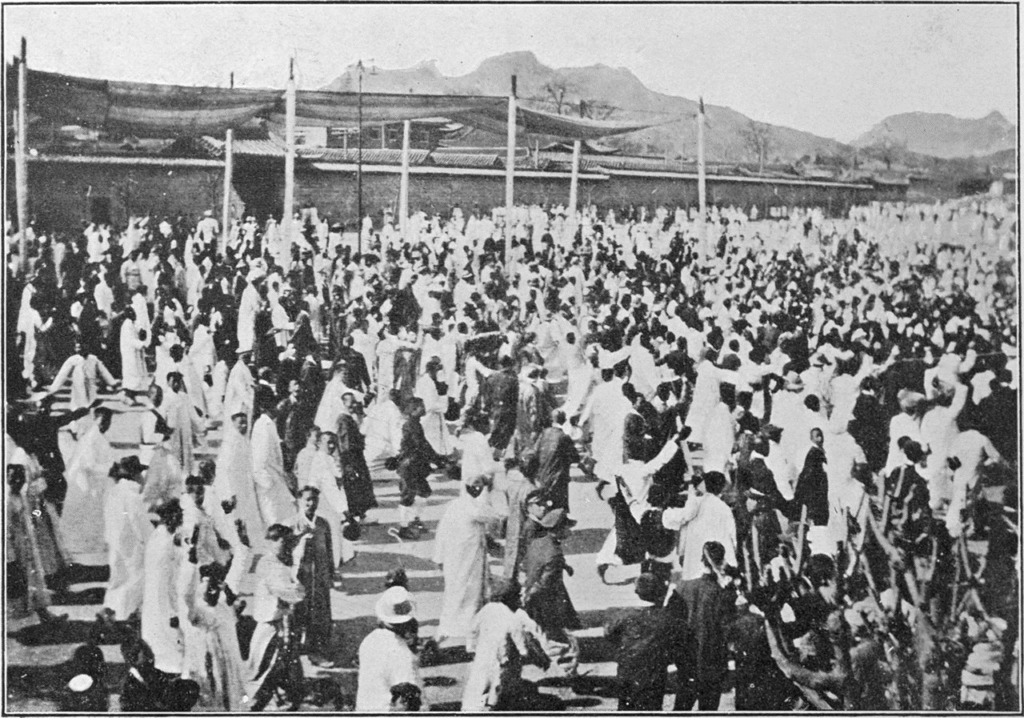
The March 1st Independence Movement (삼일운동, Samil Undong) of 1919 stands as one such moment. On this day, millions of Koreans rose peacefully to demand the one thing no empire could permanently suppress freedom.
Korea Under Japanese Colonial Rule (1910–1919)
In 1910, the Empire of Japan formally annexed Korea. Overnight, a civilization spanning over 5,000 years lost its sovereignty. The colonial administration imposed strict control. Authorities censored newspapers, banned the Korean language in schools, and seized land from farmers. They imprisoned scholars, silenced activists, and destroyed cultural sites to erase Korea’s national memory.
Political freedom collapsed. Cultural expression vanished. Fear ruled daily life. Yet repression produced resistance. The more the colonial government silenced Koreans, the stronger their resolve grew.
The Spark That Ignited the Movement
In January 1919, King Gojong, the last emperor of Korea, died suddenly. Rumors spread that Japanese authorities had poisoned him. His funeral brought massive crowds to Seoul. Grief turned into anger. Intellectuals, religious leaders, and students realized the moment had arrived.
Thirty-three leaders secretly gathered and signed the Korean Declaration of Independence. History later remembered them as the 33 Patriotic Representatives.
The Declaration of Independence: A Moral Stand
Choe Nam-seon drafted the declaration. It rejected violence and demanded dignity, justice, and equality. Its opening line shook the nation:
“We herewith proclaim the independence of Korea and the liberty of the Korean people.”
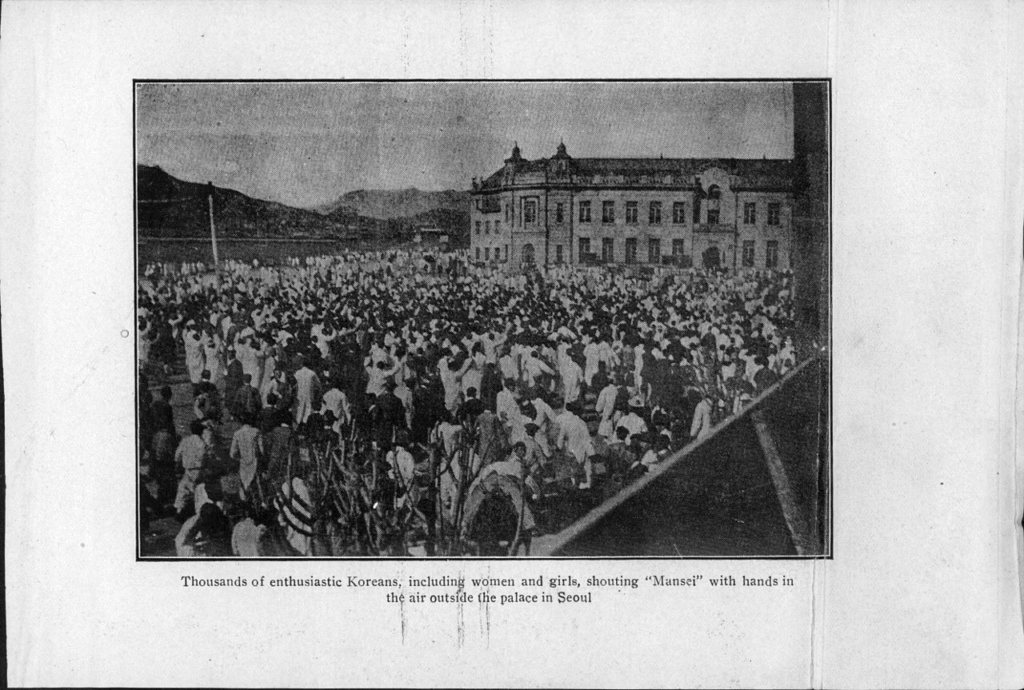
The declaration framed independence as a moral right and a human responsibility. Activists secretly copied and distributed it nationwide. On March 1, 1919, thousands gathered at Pagoda Park in Seoul. At 2 p.m., student leader Chung Jae-yong read the declaration aloud. The crowd responded with a unified cry:
Picture Credit: WIKIPEDIA
“대한독립만세!”
(Long live Korean independence!)
Those words became the heartbeat of a nation.
A Nationwide, Peaceful Uprising
The movement spread rapidly across all 13 provinces—from Pyongyang to Jeju Island. Students, farmers, shopkeepers, and women marched together. They waved handmade Taegeukgi flags, sang patriotic songs, and shouted “Manse” in public squares.
This uprising had no weapons. Citizens led it with courage and unity. Japan responded with brutal force. Soldiers fired on peaceful protesters, arrested thousands, and tortured activists.
Historical records show:
- Over 7,500 deaths
- Around 16,000 injuries
- Nearly 46,000 arrests
Japanese troops burned entire villages. At Jeam-ri, they locked villagers inside a church and set it on fire. Despite the violence, the movement did not break.
Women and Youth at the Frontline
Women and young students shaped the soul of the movement. Yoo Gwan-sun, a 16-year-old student, organized protests in Cheonan. She waved the national flag and shouted “Manse” before Japanese police arrested her.
Authorities tortured her in prison. She died in custody, but her courage lived on. Her final words echoed through generations:
“Even if my body dies, the spirit of my nation will live forever.”
Students across Korea distributed leaflets, organized rallies, and risked execution. The March 1st Movement became a youth-led national awakening.
International Echoes of Korean Resistance
Although Japan tried to suppress all news, the movement reached the world. Korean communities in China, the United States, and Europe held rallies. Leaders like Syngman Rhee and Kim Kyu-sik appealed for support at the Paris Peace Conference (1919).
Global powers offered limited help, but the movement changed international perception. The world began to see Korea as a nation fighting peacefully for justice.
Legacy of the March 1st Movement
The movement did not end Japanese rule immediately. Colonial control lasted until 1945. However, March 1st transformed Korean history. It inspired the creation of the Provisional Government of the Republic of Korea in Shanghai. This government later became the foundation of modern South Korea.

Picture Credit: WIKIPEDIA
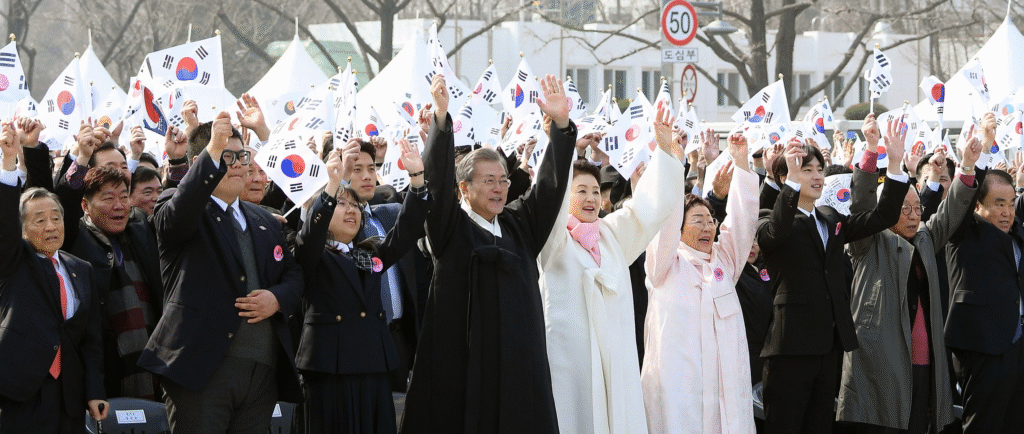
More importantly, the movement awakened a national consciousness that no regime could erase. Today, South Korea observes Independence Movement Day (삼일절) every year on March 1st. Citizens raise the national flag and remember the voices that once shook an empire.
Why the March 1st Movement Still Matters
The March 1st Movement teaches a global lesson. Freedom does not always begin with force. Often, it begins when ordinary people refuse silence. The movement showed that dignity, unity, and peaceful resistance can outlast oppression.
Conclusion
The March 1st Movement was more than a protest. It was the moment Korea rediscovered its voice. It began with thirty-three signatures and grew into millions of hearts united by hope. And in every echo of “Manse,” the world still hears Korea’s enduring promise:
Once awakened, freedom never sleeps.
Picture Credit: WIKIPEDIA
Share it with your family and friends:
Read more on our website: