
WRITER: HARDESH NARANG
EDITOR: NANDINI
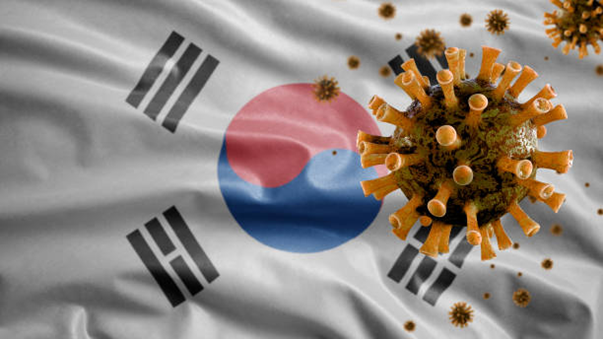
Credit: www.instockphoto.com
The breakthrough of COVID-19 in 2020 affected almost every nation across the globe, and South Korea was no different. The pandemic not only influenced the economic situation and human life, but also affected the governance, public trust, electoral results, political parties, and even foreign affairs. South Korea’s situation was quite noticeable because it was one of the nations that successfully confronted the pandemic and gained observable success, drawing international attention. Yet, the effect on politics was complex, but it evolved over time and eventually led to great public trust in the ruling party, which later paved the way for a conservative resurgence.
The first response of South Korea to COVID-19 was globally treated as the model of efficiency. The president Moon Jae-in initiated widespread testing of citizens, creating a rigorous contact-tracking system and employing technological tools to track infections. Most importantly, a nationwide lockdown was announced, which allowed economic activities to continue their work with fewer disruptions.
This method of crisis management allowed president Moon to gain strong public trust in the first half of 2020, with citizens praising the government for maintaining safety and stability during that difficult time. South Korea also reaffirmed confidence in its democratic form of the government, maintaining transparency, accountability, and public participation along with the growing distress of the nation.
The first political impact of COVID-19 was clearly seen during the parliamentary election of April 2020. With the widespread public support and trust, the ruling Democratic Party of Korea (DPK) achieved a historic victory, securing the largest and clearest win in the National Assembly of South Korea since democratization.
However, the opposition parties struggled during this period. Their negative views about the ruling party’s pandemic measure were not appreciated by the voters, who were impressed by the government’s measures toward stability and continuity. Thus, the pandemic temporarily shifted the political balance in favor of the ruling party.
COVID-19 also changed South Korea’s political agenda. The main area of conflict was the role of welfare and state support. The government initiated emergency relief funds for households, which was highly favored by the public. Problems like job security, youth unemployment, and economic inequality also gained attraction, as the pandemic pointed out these issues. People also became increasingly insecure in the highly competitive economy of South Korea.
The pandemic increased the emphasis of the government on the healthcare and technology sector. The public’s demand for a more developed and advanced healthcare system led to discussions on expanding the public medical facilities. Along with that, South Korea also increased its reliance on digital technologies for contact tracing and governance.
Although the initial response of the government was applauded by the citizens but the long-term effect was more mixed. As the time passed, cracks began to appear. The South Korean government faced criticism over the slow vaccine drills as compared to Western countries. The public began to grow frustrated over the restrictions implemented by the government and economic distress in the nation.
Moreover, domestic issues like increasing house prices and real estate scandals also raised questions about the credibility of the ruling party. These points were exploited by the conservative opposition, which showed that the government had begun to lose its touch with the citizens. The point of conflict came to light during the time of mayoral by-elections of Seoul and Busan in 2021, where the ruling party suffered defeats because of the above discussed reasons. These losses showed that the COVID-19 management worked only temporarily in the favor of the ruling party but was not able to shield itself from the later stages of the pandemic.
As the time approached the presidential election of 2022, the political interests of South Korean people shifted considerably. The candidate of the ruling party, Lee Jae-myung, led his campaign by promises of welfare expansion and pandemic recovery. The other candidate Yoon Suk-yeol, a former prosecutor with no political experience, campaigned around the public’s dissatisfaction with Moon’s economic management steps during late pandemic.
Thus, through this strategy Yoon won the election by a narrow margin and established his government. This shows that how quickly public opinion can change when it comes to politics, how power can move from democratic ruling party to a conservative party, reflecting the struggles of voters during the time of the pandemic which were mainly related to their economic hardships.
The effect of COVID-19 on South Korea was mixed and dynamic. In the short term, the government’s efficient management during the time of crisis led to initial favoritism and a historic victory in the election. The pandemic also reshaped the political opinions of the public, ensuring healthcare reforms, technological advancements and digital governance. Yet, the economic hardships and vaccine delays led to an unpopular support of the ruling party and paved the way for the opposition party to take the seat in the next presidential election.
Share it with your Family & Friends :