
WRITER : HARDESH NARANG
EDITOR : ANANYA RAUT
Electronics and semiconductors are a field in which south Korea dominates most clearly and powerfully making it a global technological powerhouse. The nation has heavily and dedicatedly been investing in research, education and industrial infrastructure in attempt to become one of the world’s leading producers of microchips, displays and advanced electronic systems. This sector is not only a technological upfront of the country but also the backbone of south Korea’s economy, accounting for nearly one fifth of its total exports. Organizations like Samsung electronics, SK Hynix and LG Display who led the country and this sector in terms of innovation, making the semiconductor industry a symbol of national pride and a strategic necessity in an era defined by digital advancements.
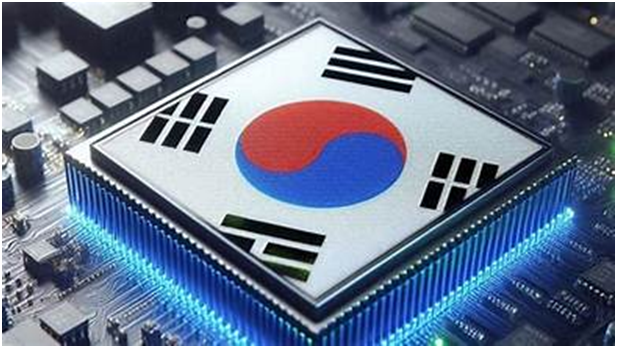
Picture credit- storage.googleapis.com
The key reason behind the success of this sector lies within south Korea’s self-developed technology. The south Korea’s decision in 1980s and 1990s to master semiconductor design and production brought them at this place on the tower of digital transformation. Now they lead in DRAM and NAND flash memory production, technologies which are essential for production and working of smartphones, servers and superconductors. Samsung and SK Hynix are two companies that control more than half of the global memory chip market, making south Korea undefeatable in this category. Beyond memory, Korean companies are also focusing on advancing logic chips, AI processors and next generation chip designs. What points out the South Korea’s achievements is its ability to control the entire production chain, starting from materials to design to production to large scale manufacturing, making a certain level of independence that only a few nations are able to possess.
The nation’s ability in electronics extend beyond semiconductors. LG Display is a global winner in OLED screen technology, suppling panels for smartphone brands, televisions and laptops. Samsung electronics is not only the largest memory chip maker but also a top brand in consumer electronics which includes smartphones to appliances. South Korea has also been a early and leading innovator in mobile networks, moving swiftly from 4G to 5G technology and is also investing heavily in research of 6G communications. This innovating and dedicating spirit towards electronics had formed the3 backbone of south Korea’s global reputation as an electronics hub.
The sector has also been supported by large-scale government and private investment. The south Korean government has consistently treated semiconductors as a “strategic industry,” providing it tax incentives, support for research and development and infrastructure to foster faster growth. In 2021, the government declared a initiative known as “K-semiconductor Belt”, a ₩510 trillion (approximately $450 billion) investment plan to create south Korea as the world’s largest semiconductor supply chain by 2030, this initiative is to be completed by being inclusive of private firms as well. Samsung alone has sworn to create $230 billion for new fabrication facilities and SK Hynix has also planned to continue to expand advanced memory and AI-related chip research.
Future plans of south Korea in this field have even greater ambition. South Korea is now focusing on the development of 2-nanometer and 1.4-nanometer process technologies, in completion with Taiwan’s TSMC for leadership in the most advanced chip making. Along with that the Korean companies are also investing in AI-specific semiconductors, neuromorphic processors and quantum computing chips, which are all crucial for the upcoming technological era. The government and the industry are also working together to secure supply chains in area that contains rare earth materials, lithography equipment and chip design software, all that while south Korea is still remains technological independent. Beyond economics this sector has been drastically significant. In the world of digital infrastructure, semiconductor sector is known as the “rice of the industry”, essential for everything from smartphones and electric vehicles to medical equipment and defense systems. South Korea’s mastery in semiconductor technology is not only important for its economical stance but also the geopolitical situation of the country, which provide a powerful position in international trade and diplomacy. Just as rockets and satellites symbolize its space ambitions, semiconductors represent South Korea’s technological backbone—fueling industries, powering innovation, and ensuring its place at the heart of the digital world.
Share it with your Friends & Family :
Is the fb777 app any good? Should I download it or just stick with the website? Any feedback appreciated. fb777 app
Needed to Okbet download and honestly it was the fastest install ever. Didn’t even have time to grab a beer! The app itself is pretty good. okbet download
PH88 is the spot to be! Been playing on ph88game.org for a few weeks now and I’m digging the variety of games. Site’s easy to navigate too. Get on it ph88