
Writer: Disha Budiyal
Editor: Arpita Jena
INTRODUCTION
When it comes to travelling it’s more than just visiting or holidaying. It’s also about learning how the laws, beliefs and everyday practices differ across borders. South Korea and India, though both are vibrant Asian nations, have strikingly different legal landscapes. This main aim of this article is to examine activities that are legal in the Republic of Korea but are illegal in the Republic of India.
PUBLIC ALCOHOL CONSUMPTION
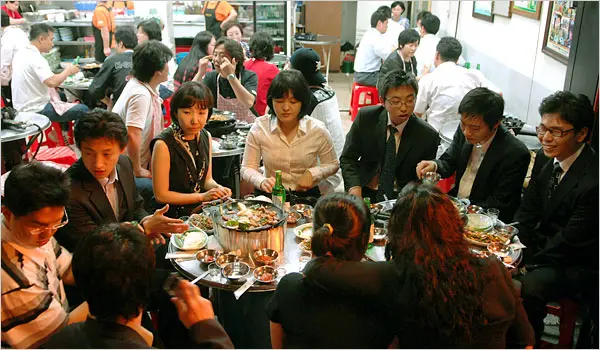
In South Korea, drinking in public spaces like streets, parks and “convenience store tables” has been quite popular among the natives. In contrast, public drinking in India is a criminal offense. Section 510 of the IPC, which penalizes misconduct in public by an intoxicated person. Many states also have specific excise laws that strictly prohibit drinking in non-licensed public areas.
The differences arise from South Korea’s historically lax approach under the National Health Promotion Act. Though local ordinances in 2024 have begun designating specific “no-drinking zones” in parks. In India, alcohol is a “State List” subject under the Seventh Schedule. This allows states like Bihar and Gujarat to impose total prohibition.
Credits: THE NEW YORK TIMES
PROFESSIONAL TATTOOING
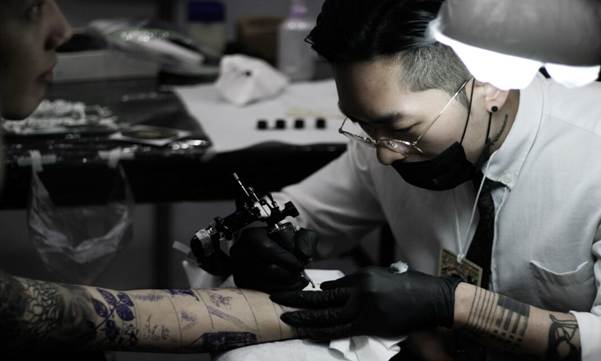
While previously restricted to medical doctors, the newly passed Tattooist Act, 2025 legalizes tattooing by licensed non-medical professionals in South Korea. This act overrides a 1992 Supreme Court ruling that classified tattooing as a “medical procedure”.
Credits: ukrepublictimes
On the other hand, interestingly, tattooing is legal in India. However it remains a largely unregulated “gray market”. Without the formal state-mandated licensing, hygiene exams, and record-keeping as required by Korea’s new law. India lacks a specific federal statute regulating the professional standards of tattoo artists.
CATTLE SLAUGHTER
In South Korea, the slaughter of cattle and the sale of beef are entirely legal. This forms a major part of the domestic economy.
Whereas in India, there is prohibition and heavy restriction on Cattle slaughter is strictly in 20 out of 28 states. Penalties can include life imprisonment in states like Gujarat or the Union Territory of DNHDD. India’s Article 48 of the Constitution mandates the state to prohibit the slaughter of cows and calves. This has led to various state-level Cattle Preservation Acts that criminalize the industry.
24/7 COMMERCIAL OPERATIONS
In South Korea, a “24-hour” culture is standard. Many cafes, restaurants, and convenience stores operating around the clock without special permits. While in India, state-specific Shops and Establishments Acts manage commercial hours. This historically mandate late-night closures.
South Korea lacks the restrictive “closing hour” laws found in India. While India did introduce the Model Shops and Establishments Acts, 2016 to allow 24/7 operations, it is only advisory, and many states have not yet implemented it.
COSMETIC SURGERY ADVERTISING
In South Korea, open advertising for cosmetic procedures is legal and omnipresent in subways and on specialized mobile platforms. Recent local ordinances limit the volume of such ads to 20% per station to address concerns about body image obsession.

Credits: koreaboo
However, in India, there is prohibition on individual doctors doing direct advertisement or solicitation of patients. Establishments can only advertise basic information like the name and facilities provided.
CARRYING SMALL KNIVES OR MULTI-TOOLS
In South Korea, carrying small utility knives and multi-tools like Leatherman is legal for everyday use. Only “swords” with blades 15 cm longer require a police license.
On the flip side, in India, possession of blades longer than 9 inches (22.86 cm) or wider than 2 inches (5.08 cm) is a regulated offense. In Delhi, it is there is prohibition on button-actuated or spring-knives longer than 7.62cm are specifically for manufacture or sale.
CCTV SURVEILLANCE IN PUBLIC SPACES
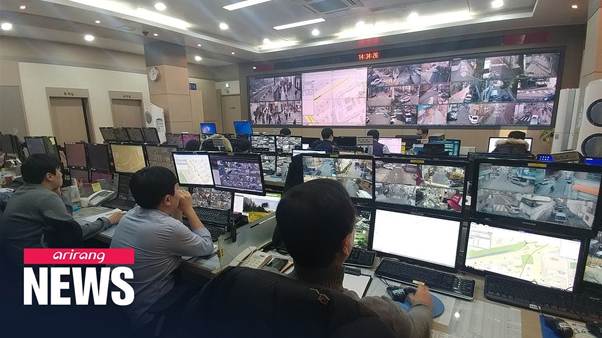
In South Korea, massive CCTV networks are legally permitted and socially accepted as a primary tool for public safety and low crime rates. Organizations must appoint a Chief Privacy Officer to ensure data is handled correctly.
Credits: youtube; Arirang news
In India, surveillance faces legal scrutiny under the right to privacy (Article 21). While the government is expanding CCTV use, the 2023 Digital Personal Data Protection Act has been criticized for giving the state broad exemptions to bypass privacy for surveillance.
GAMBLING IN CASINOS
In South Korea, foreign nationals can legally gamble at 16 “foreigner-only” casinos located in major tourist hubs like Seoul, Busan, and Jeju Island. While South Korean citizens are permitted to gamble at only a single location, that is, Kangwon Land Hotel & Casino. strictly controlled actions, with locals limited to 15 visits per month and the casino restricted to 20 hours of operation per day.
Gambling is broadly illegal across the majority of Indian states and union territories. But there are some regional exceptions including, regulated land-based or offshore casinos are currently operational only in Goa (which allows floating casinos on the Mandovi river and slot machines in 5-star hotels) and Sikkim (which permits casino games in 5-star hotels). While Daman legally permits casinos under its own 1976 Act.
SALE AND CONSUMPTION OF PORNOGRAPHY
In South Korea, producing, selling or distributing pornography is a criminal offense under the Criminal Act and the Act on Promotion of Information and Communications Network use. However, there is no prosecution on private consumption by adults is generally unless it involves non-consensual recordings (molka) or minors. This is notably visible in the form of adult channels in motels.
In India, production and distribution are illegal under the IT Rules 2021 and Section 292 of the IPC. However, private viewing is not a criminal offense. The government blocks thousands of websites to protect the “modesty of women”.
ALL-NIGHT GAMING IN PC BANGS
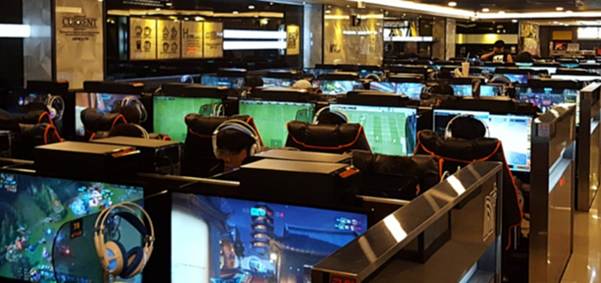
In South Korea, PC bangs (internet cafes) operate around the clock, serving as social hubs, workspaces, and even temporary resting places. Following the 2021 repeal of the “Shutdown Law,” the government removed the mandatory block that prevented minors under 16 from playing online games between midnight and 6:00 a.m. While some establishments still implement a 10:00 p.m. physical curfew for minors for safety, the legal restriction on their digital access has been replaced by a “choice permit” system where parents decide their children’s hours.
Credits: seoulinsidersguide
In India, until recently, most commercial establishments, including cyber cafés, were to close by 11:00 p.m. or midnight under state-level labor laws. While 24/7 operations are now becoming legal in states like Delhi and Tamil Nadu (as of 2025), they require strict compliance with safety, gender inclusivity, and worker shift rotations.
Cyber cafés are legally barred from allowing users to access the internet without establishing their identity through official documents (Aadhaar, Passport, PAN). Owners must maintain a detailed log register of all visitors and their browsing history for at least one year, and police have the authority to inspect these records at any time without a warrant.
CONCLUSION
The differences highlighted in this article show that legality is not a universal concept but it is rather shaped by social priorities, historical experience, and administrative structures. Activities that are legally permitted in South Korea may be restricted or criminalised in India and vice-versa, not because one society is more permissive than the other, but because each state regulates public life according to its own realities.
Ultimately, these legal contrasts encourage us to look beyond surface-level comparisons and recognise how law mirrors the society it governs. Awareness of such differences allows travellers to move more mindfully across borders and fosters a deep appreciation of how nations balance freedom, order, and cultural values in their own ways.
Share it with your family and friends:
Read more on our website: